Market Research, Market Size, Market Research Report, Market Share, Market Analysis, Market Growth,

Tuesday, March 23, 2021

Rat Model Market Sales, Segments, Capacity Outlook, Growth and Analysis

Major Growth Boosting Factors: The Continuous support in the form of investments and grants, and personalized medicine fueling the demand for personalized humanized rat models are some of the factors driving the growth of the rat model market. Expanding with the increase in R&D activities in pharmaceutical industries. These rat model are being used in many applications such as toxicology, oncology, diabetes, neurology, immunology and infectious diseases, and others (rare disease, cardiovascular, metabolic disease, hematopoiesis, and regenerative medicines).

Revenue Growth Opportunities: The overall Rat Model Market is expected to reach USD 588.9 million, at a CAGR of 8.7%

Major Market Developments;

# In August 2016, Charles River Laboratories, Inc. entered into a strategic partnership with The Milner Therapeutics Institute and Consortium (UK). This partnership with the Consortium allows the academic institutions access to Charles River’s early discovery and drug development and services for the early stage drug development processes.

# In September, 2016, Charles River Laboratories International, Inc. acquired Agilux Laboratories (US), a provider of bioanalytical services, drug metabolism and pharmacokinetic services, and pharmacology services. This acquisition is expected to compliment Charles River’s non-clinical portfolio and improve the clients’ early-stage research efforts by enabling them to seamlessly transition their drug candidates through the discovery and safety assessment process.

# In October 2015, Horizon Discovery Group plc expanded its UK based headquarters. The new facility is likely to accommodate 200 employees across manufacturing, services, research, and general and administrative functions.

Request Research Sample Pages: https://www.marketsandmarkets.com/requestsampleNew.asp?id=76036494


On the basis of type,

The rat model market is segmented into outbred rats, inbred rats, knockout/genetically engineered rats, hybrid/congenic rats, conditioned/surgically modified rats, and immunodeficient rats model. Knockout/genetically engineered rats segment is expected to grow at the highest CAGR during the forecast period. The high growth rate of knockout/genetically engineered rats segment can be attributed to the use of this type of rat model to carry out researches on disease such as oncology, obesity, heart disease, diabetes, arthritis, drug abuse, anxiety, aging, and Parkinson’s.

On the basis of services,

The rat model market is segmented into breeding, cryopreservation, quarantine, rederivation, model in-licensing, genetic testing, and others such as surgical services, line rescue services, and in vivo pharmacology services. The cryopreservation segment is estimated grow at the highest CAGR during the forecast period, as this segment help in obtaining the genetic material of rats even after the reproductive lifespan of these rats is over. This cuts down time and cost needed for reproduction of rats.

Download PDF Brochure: https://www.marketsandmarkets.com/pdfdownloadNew.asp?id=76036494

Applications of Rat Model Market;

DIABETES;

Rats are considered to be excellent experimental models for understanding the complex genetic basis of diseases such as diabetes. Due to the ever-increasing prevalence of diabetes globally; it has become important to study the mechanism of the disease. However, it is quite difficult to carry out research studies in human beings, owing to problems such as genetic heterogeneity and lack of controlled lifestyles. Rat models act as suitable models to study specific genetic mutations and to understand the function of genes on a homogeneous genetic background.

ONCOLOGY;

Rat models recapitulate various aspects of genesis, progression, and clinical course of human cancers. Hence, they act as ideal study models for cancer researchers engaged in a variety of basic, translational, clinical, and epidemiological investigations.

Global Leaders: Charles River Laboratories International, Inc. (U.S.), Taconic Biosciences, Inc. (U.S.), Envigo (U.K.), Laboratory Corporation of America Holdings (U.S.), Biomere (U.S.), Janvier Labs (France), genOway SA (France), and Horizon Discovery Group plc (U.K.) are some of the key players in the rat model market worldwide

Wednesday, March 10, 2021

COVID-19 Impact on Critical Care Device Market - Segmentation, Major Players & Geographical Analysis

Major Growth Boosting Factors: The Critical Care Device Market is driven primarily by the increasing number of ICU beds owing to the continuously rising COVID-19 cases, increasing demand for ventilators for effective management of critical COVID-19 patients, and ease of regulatory requirements to facilitate the production of critical care devices. In addition, the development of low-cost ventilators and the expected increase in healthcare budgets offer significant growth opportunities for players operating in the critical care devices market. However, disruption of supply chain & logistics due to the rapid spread of coronavirus is likely to challenge the growth of this market.

Revenue Growth Opportunities: The Global COVID-19 Impact on Critical Care Device Market size is expected to reach USD 27.29 billion by 2021 from an estimated value of USD 37.97 billion in 2020. The critical care devices market is expected to witness a growth of 44.1% from 2019 to 2020.

Recent Developments:

  • In April 2020, The FDA issued Emergency Use Authorization for B. Braun’s Perfusor Space Syringe Infusion Pump, Infusomat Space Volumetric Infusion Pump, and Outlook ES Pump systems to deliver nebulized meds into a nebulizer to treat COVID-19 patients.
  • To help ensure the continuity of supply, BD has placed all BD and Alaris infusion sets on manual inventory allocation until further notice. As a part of the supply continuity plan, the company is also reducing the number of available product SKU’s of Alaris system pump sets.
  • In October 2019, B. Braun Medical Inc. (US) collaborated with STANLEY Healthcare (US) to integrate and deploy B. Braun’s Space Infusion Pump Systems along with DoseTrac Infusion Management Software with STANLEY Healthcare’s MobileView software, Aeroscout RTLS MobileView, at Saratoga Hospital, located in New York, US, to provide real-time pump status data.
  • In April 2019, Smiths Medical (US) partnered with HCA Capital Division (US) to integrate the Medfusion 4000 system with PharmGuard Software with HCA’s electronic medical records system (EMR), to provide better patient outcomes by reducing medication errors.

Request Research Sample Pages: https://www.marketsandmarkets.com/requestsampleNew.asp?id=216430576

Based on products;

The critical care devices market is segmented into ventilators & supplies, sleep apnea devices, patient monitors, hyperbaric oxygen therapy devices, infusion pumps, defibrillators, anesthesia machines, blood warmers, and other critical care devices supplies. The ventilators segment is expected to grow at the highest rate during the forecast period. This can be attributed to owing to rapid manufacturing of emergency ventilators, worldwide, and the development of low-cost ventilators.

Based on end-users;

The critical care devices market has been segmented into hospitals, home care settings, ambulatory care settings, and emergency medical services. The hospitals & clinics segment accounted for the largest share of the critical care devices industry in 2019. The large share of this segment is attributed to the strong financial capabilities of hospitals for purchasing high-priced critical care devices, the large patient pool treated at hospitals, and the availability of trained professionals to operate these critical care devices.

Download PDF Brochure: https://www.marketsandmarkets.com/pdfdownloadNew.asp?id=216430576

Geographical Scenario: The critical care devices market is segmented into five major regions, namely, North America, Europe, the Asia Pacific (APAC), Latin America, and the Middle East & Africa. In 2019, North America accounted for the largest share of the critical care devices industry. The large share of this region can primarily be attributed to the high adoption of specialty infusion pumps, the high number of positive COVID-19 cases & deaths in the US, a strong healthcare system, and the presence of many large hospitals in the region. Moreover, a large number of major global players are based in the US, owing to which the US can easily manufacture these devices.

Global Leaders: The key players in the global critical care devices market are Becton, Dickinson and Company (US), B. Braun Melsungen AG (Germany), Baxter International Inc. (US), Fresenius Kabi (Germany), Medtronic plc (Ireland), ResMed (US), Koninklijke Philips (Netherlands), and Fisher & Paykel Healthcare (New Zealand), among others.

Tuesday, March 2, 2021

COVID-19 impact on Medical Supplies Market - Comprehensive Research Including Top Key Players and Forecast Report

Major Growth Boosting Factors: The market for medical supplies is driven primarily by the growing awareness on environmental & personal hygiene leading to rising demand for disinfectants , expansion of healthcare settings owing to increasing COVID 19 patients, increased requirement of PPE kits & N95 masks globally, rising demand for ventilators, and increasing demand for diagnostic supplies.

In addition, repurposing liquor production lines to manufacture sanitizers offers an opportunity for players in this market. However, delays in non-urgent treatment and surgical procedures and impact on supply chain and logistics due to lockdown is likely to restrain the growth of this market.

Revenue Growth Opportunities: The COVID-19 impact on Medical Supplies Market is expected to reach USD ~100 billion by 2021 from an estimated value of USD ~78 billion in 2019, growing at a CAGR of ~13.4% during the forecast period.

Recent Developments:

  • In April 2020, Baxter received USFDA Emergency Use Authorization for Oxiris Blood Purification Filter for COVID-19 Treatment.
  • In Arizona, the US, SanTan Brewing, has repurposed its beer production line to manufacture hand sanitizer. In April 2020, SanTan began producing 400 gallons of medical-grade hand sanitizer for first responders and healthcare professionals.
  • In New York (US), in March 2020, Pernod Ricard’s facility in Fort Smith, Ark. produced 1,000 gallons of hand sanitizer; it originally produced Malibu coconut rum and Seagram’s gin.
  • In India (Bengaluru), Diageo India, which sells McDowell’s whiskey and Smirnoff vodka, announced that it would produce 300,000 liters of hand sanitizers to help overcome the shortage.

Request Research Sample Pages: https://www.marketsandmarkets.com/requestsampleNew.asp?id=158189339


Based on type,

The medical supplies market is segmented into intubation and ventilation supplies, disinfectant, personal protective equipment, diagnostic supplies, sterilization supplies, infusion and injectable supplies, dialysis supplies, wound care supplies, radiology supplies, and other medical supplies. The disinfectant segment is expected to grow at the highest CAGR during the forecast period. This growth can be attributed to factors such as the increasing demand for hand sanitizers, rising awareness about personal hygiene, increased consumption of disinfectant in healthcare facilities are driving the growth of the disinfectant market globally.

Based on end users,

The medical supplies market is segmented into hospitals, clinics, and other end-users. The hospital segment is expected to grow at the highest CAGR owing to increasing demand for hospital beds and intensive care units in countries with the increasing incidence of COVID-19, increasing demand for specialized staff such as infectious disease experts providers, respiratory therapists, and physicians and nurses who can provide intensive and critical care, increased consumption of personnel protective equipment within the hospital premises; and the increasing support from government and non-government organization to combat with COVID-19 are the major factors driving the demand and uptake of medical supplies in hospitals growth.

Download PDF Brochure: https://www.marketsandmarkets.com/pdfdownloadNew.asp?id=158189339

Geographical Scenario:

North America accounted for the largest share of the medical supplies market in 2020, followed by Europe. The large share of this region is attributed mainly to a high number of positive COVID-19 cases and deaths in the US, a strong healthcare system, and the presence of many large hospitals. Moreover, a large number of major global players are based in the US, owing to which the US can easily manufacture these devices.

Global Leaders:

The prominent players in the medical supplies market are Medtronic plc (Ireland), Cardinal Health, Inc. (US), Becton, Dickson and Company (US), Johnson & Johnson (US), and B. Braun Melsungen AG (Germany), Fresenius Medical Care AG & Co. KGaA (Germany), Baxter International, Inc. (US), STERIS Corporation (US), Getinge Group (Sweden), Advanced Sterilization Products (US), 3M Company (US), Smith & Nephew (U.K.), Mölnlycke Health Care AB (Sweden),  among others.

Wednesday, November 18, 2020

Back-end Revenue Cycle Management Market Size, Share on Global Analysis Report 2019-2023

The Factors such as the growing importance of denials management, increasing patient volume, process improvements in healthcare organizations, and declining reimbursement rates are driving the growth of the market. However, the high cost of deployment, integration of back-end revenue cycle management solutions, data breaches and loss of confidentiality, and lack of skilled IT professionals in healthcare are expected to limit market growth to a certain extent in the coming years.

According MarketsandMarkets Research – The Back-end Revenue Cycle Management Market is projected to reach USD 10.4 billion, at a CAGR of 5.0%.

Market Dynamics:

Growing importance of denials management;

To reduce costs and maximize profits, insurance companies are increasingly denying claims as well as coverage to patients being treated for chronic or persistent illnesses. This is putting an extra burden on healthcare providers to manage operating costs, and in turn is supporting the adoption of back-end revenue cycle management solutions (with a growing number of healthcare providers focusing on properly analyzing denied claims and appealing them).

Many healthcare providers across the globe still use manual and paper-oriented approaches to manage denials. This results in errors, delayed follow-ups, and miscommunication between healthcare providers and insurance companies. The use of back-end revenue cycle management solutions over manual and paper-oriented approaches can not only help healthcare providers overcome these issues but also help them save significant costs.

Browse 79 market data Tables and 31 Figures spread through 136 Pages and in-depth TOC | Request Research Sample Pages: https://www.marketsandmarkets.com/requestsampleNew.asp?id=204439794

Services segment to dominate the back-end revenue cycle management market

By product & service, segmented into software and services. The services segment is expected to account for the largest share of the back-end RCM Market in 2018. The large share of this segment can be attributed to the recurring nature of services such as training and development, installation, software upgrades, consulting, and maintenance. However, due to the need for periodic software upgrades, the software segment is expected to witness the highest growth during the forecast period.

cloud-based systems to register the highest CAGR during the forecast period

On the basis of delivery mode, segmented into on-premise and cloud-based systems. The cloud-based segment is expected to register the highest CAGR of the back-end revenue cycle management market during the forecast period. Growth in this segment can be attributed to the comparatively lower capital expenses and operational costs incurred in this model, alongside its scalability, flexibility, and affordability.

Download PDF Brochure: https://www.marketsandmarkets.com/pdfdownloadNew.asp?id=204439794

Geographically, the back-end revenue cycle management market is divided into North America, Europe, Asia, and the Rest of the World (RoW). North America is expected to account for the largest share in 2018 owing to factors such as growing HCIT investments in the region and the presence of regulatory mandates. North America is followed by Europe and Asia. The market in Asia is relatively nascent; however, it is projected to be the fastest-growing market during the forecast period.

Athenahealth (US), Cerner Corporation (US), Allscripts Healthcare Solutions, Inc. (US), eClinicalWorks (US), Optum, Inc. (US), McKesson Corporation (US), Conifer Health Solutions (US), GeBBs Healthcare Solutions (US), The SSI Group (US), GE Healthcare (US), nThrive (US), DST Systems (US), Cognizant Technology Solutions (US), and Quest Diagnostics (US) are the key players in the back-end revenue cycle management market.

Tuesday, November 17, 2020

Veterinary Chemistry Analyzer Market – Size, Share, Trends| Global Forecast

According to the new market research report “Veterinary Chemistry Analyzer Market by Product (Chemistry Analyzer, Glucometer, Consumables (Panel, Test Strip, Reagent)) Application (Blood Chemistry Analysis, Urinalysis, Glucose Monitoring) & Animal (Companion & Livestock) – Global Forecast” published by MarketsandMarkets™.

Revenue Growth Opportunities?

The Global Veterinary Chemistry Analyzer Market is estimated to grow at a CAGR of 8.7%, to reach USD 1,205.2 Million.

Research Methodology;

Top-down and bottom-up approaches were used to validate the size of the global veterinary chemistry analyzer market and estimate the size of various other dependent sub-markets. This study estimates the market size for 2017 and projects its demand till 2022. The major players in the market were identified through secondary research and their market revenues were determined through primary and secondary research. Secondary research included the study of the annual and financial reports of the top market players, whereas primary research included extensive interviews with the key opinion leaders such as CEOs, directors, and marketing executives

Browse 206 market data tables and 24 figures spread through 250 pages and in-depth TOC – Request Research Sample Pages: 
https://www.marketsandmarkets.com/requestsampleNew.asp?id=48798056

Market Segmentation in Depth:

On the basis of product, this market is segmented into instruments and consumables (panels, kits, test strips, and reagents). The consumables segment accounted for the largest share of the global veterinary chemistry analyzer market. It is expected to register the highest growth during the forecast period. The high growth of this segment is mainly attributed to the increased adoption of the pre-loaded multiple reagent panels and pre-loaded single slide reagent panels by the end users.

On the basis of application, the market is categorized into blood chemistry analysis, urinalysis, glucose monitoring, and blood gas-electrolyte analysis. The blood chemistry analysis segment accounted for the largest share, while the glucose-monitoring segment is expected to witness the highest growth during the forecast period. The veterinary chemistry analyzer market is further segmented, on the basis of animal type, into companion animals and livestock.

Download PDF Brochure: 
https://www.marketsandmarkets.com/pdfdownloadNew.asp?id=48798056

Leading Key Players in the Worldwide Industry:

The global Veterinary Chemistry Analyzers Market is dominated by a few global players. Amidst intense market competition, major players are continuously focusing on achieving higher market shares through new product launches, agreements, partnerships, acquisitions, and expansions.

Some of the prominent players in this market are IDEXX Laboratories, Inc. (U.S.), Abaxis, Inc. (U.S.), Heska Corporation (U.S.), Randox Laboratories Ltd. (U.K.), ARKRAY, Inc. (Japan), Eurolyser Diagnostica GmbH (Austria), Alfa Wassermann Inc. (U.S.), DiaSys Diagnostic Systems, USA, LLC (U.S.), Diconex SA (Argentina), Chengdu Seamaty Technology Co., Ltd.(China), Biochemical Systems International Srl (Italy), ELITechGroup (France), and URIT Medical Electronic Group Co. Ltd (China).

Geographical Regions Mapped in Report:

Geographically, the veterinary chemistry analyzer market is categorized into developed and emerging markets. The emerging markets (including China, India, and Latin America) segment is expected to witness the highest growth rate during the forecast period. Growth in these markets can be attributed to the rising animal population, increasing demand for animal-derived food products, growing per capita animal health expenditure (especially in India, Latin America, and China), growing pet adoption, and rising awareness regarding animal health and welfare

Friday, October 30, 2020

Cell Lysis Market Research Report 2020 - By Key players & Growth Rate

The report aims to provide insights into the global cell lysis market. It provides valuable information on the product, type of cell, and end-users, in the market. Furthermore, the information for these segments, by region, is also presented in this report. Leading players in the market are profiled to study their product offerings and understand the strategies undertaken by them to be competitive in this market.

According MarketsandMarkets Research – The Global Cell Lysis Market is expected to reach USD 3.84 Billion, at a CAGR of 10.3%.

Major Market Growth Drivers:

  • Increasing Government Funding for Research
  • High Prevalence of Diseases
  • Expanding Biotechnology and Biopharmaceutical Industries
  • Growing Focus on Personalized Medicine


The global cell lysis market consists of various products that are used for extraction of nucleic material, proteins and other cell content. This market is driven by several factors such as increasing government funding for research, high prevalence of diseases, expanding biotechnology and biopharmaceutical industries, and growing focus on personalized medicine. High potential growth in emerging markets has opened an array of opportunities for the market.

Browse 84 market data Tables and 41 Figures spread through 135 Pages and in-depth TOC | Request Research Sample Pages: https://www.marketsandmarkets.com/requestsampleNew.asp?id=260138321

On the basis of product, the Cell Fractionation Market is segmented into consumables and instruments. The consumables segment is expected to account for the largest share of the global market. Consumables include reagents and kits, beads, and disposables. Reagents and kits are further classified into enzymes, detergent solutions, and other reagents and kits. Enzymes are mostly used for chemical cell disruption and form major portion of the reagents and kits market. The instruments segment comprises sonicators, homogenizers, and other instruments. Sonicators account for largest share of the instruments market owing to its increasing use in cell fractionation. However, high cost of sonicators hinders its growth.

On the basis of type of cell, the cell lysis market is segmented into mammalian cells, microbial cells, and other cells. The mammalian cells segment is expected to account for the largest share of this market, owing to rising investments by governments and companies for cell-based research. Rising prevalence of diseases such as cancer, HIV/AIDS urges a demand for advanced treatment options and development of cell therapies. This increases the market growth of mammalian and microbial cells.

Download PDF Brochure: https://www.marketsandmarkets.com/pdfdownloadNew.asp?id=260138321

Geographically, the Cell Fractionation Market is dominated by North America, followed by Europe, Asia, and the Rest of the World (RoW). Growth in the North American segment is primarily driven by increasing aging population, and rising government funding in the North American countries.

The major players in the cell lysis market are Beckman Coulter, Inc. (U.S.), Becton, Dickinson and Company (U.S.), Bio-Rad Laboratories, Inc. (U.S.), Cell Signaling Technology, Inc. (U.S.), F. Hoffman-La Roche AG (Switzerland), Merck KGaA (Germany), Miltenyi Biotec (Germany), QIAGEN N.V. (Netherlands), Qsonica, LLC. (U.S.), and Thermo Fisher Scientific Inc. (U.S.).

Tuesday, September 29, 2020

Accounting Software | Trends & Evaluation Methodology | 360quadrants

 Accounting Software is mainly designed for accounting experts to manage accounts and perform day to day accounting procedures. Accounting is an organized practice, work, or process of communicating and tracking financial data.

360Quadrants has released a quadrant on the best accounting software to help businesses make quicker and more informed decisions for their business. Ranking Quadrants are generated post analysis of companies (product portfolios and business strategies) and will be updated every three months based on market and regional analyses and developments in the accounting software space. 360Quadrants conducts an in-depth SWOT analysis which helps service providers learn about new opportunities and areas where they lag behind their peers. It also helps clients choose the most appropriate vendor for their requirements.

360quadrants Company Evaluation Methodology:

Top Accounting Software companies have been rated using the following methodology;

1.     A highly experienced team of researchers and senior analyst’s conducts extensive research to generate a list of vendors.

2.     An algorithm is used to collect inputs from key stakeholders—industry experts, buyers, vendors, and 360Quadrants analysts—based on criteria for Product Maturity and Company Maturity.

3.     Criteria under Product Maturity include breadth and depth of product/service offering, product features and functionalities, product differentiation, and their impact on customer value.

4.     Criteria under Company Maturity include geographical footprint, partner ecosystem, financial stability, and client coverage, or sector footprint.

5.     Approximately 90+ in-depth parameters were considered for research for the accounting software. These parameters will be updated every six months to ensure the latest developments are taken into consideration. 

best accounting software

Trends in Accounting Software Market;

Developments such as SaaS have seen the industry introduce on-premise options to cloud-based services. Today, there are more technical challenges to the accounting process. The accounting trends are:

Bots and AI – Although artificial accounting technology is in its initial stages, growing numbers of companies are starting to use it as part of their services. Most of the suppliers released smart assistants using machine learning and AI to support financial advisers in their everyday tasks. All types of businesses, including entrepreneurs and small firms, may benefit from knowledgeable aides in accounting.

Two-tier design – Businesses often prefer to follow two different approaches to handle their budgets, leading to the drawbacks of some accounting strategies and ERP schemes. For example, a manufacturer may choose an ERP that delivers reliable manufacturing but weak accounting interface, as well as a different accounting system that will better support their requirements.

Read a Press Release on Accounting Software: https://www.360quadrants.com/press-release/360quadrants-releases-best-accounting-software-companies-of-2020


Thursday, September 24, 2020

The Future of Accounting Software | Key Features | 360quadrants


Accounting Software is mainly designed for accounting experts to manage accounts and perform day to day accounting procedures. Accounting is an organized practice, work, or process of communicating and tracking financial data.

360Quadrants has released a quadrant on the best accounting software to help businesses make quicker and more informed decisions for their business. Ranking Quadrants are generated post analysis of companies (product portfolios and business strategies) and will be updated every three months based on market and regional analyses and developments in the accounting software space. 360Quadrants conducts an in-depth SWOT analysis which helps service providers learn about new opportunities and areas where they lag behind their peers. It also helps clients choose the most appropriate vendor for their requirements.

The Future of Accounting Software-

Artificial Intelligence Reduces Redundancy;

Artificial Intelligence (AI) will never fully replace your accountant, but AI-based accounting software is already performing several tasks. One of the major achievements of AI is automatically matching transactions from connected bank accounts to invoices and expenses. This helps to reduce the amount of time needed for bank reconciliation. Additionally, with an AI-based system there is no need for more pressure over paper statements every month to make sure the transactions match your journal ledger. By permitting AI to handle redundant tasks, the margin of error is much lesser. Obviously, some tasks will always need oversight, but AI-based accounting systems will alert you whenever data needs a human touch.

Blockchain Will Make Accounting Simpler;

Disruptive and driving technologies like Blockchain, which is at the core of cryptocurrencies like Bitcoin, are making waves because of its resistance to fraud and ability to record transactions without a middleman. For instance, businesses must use a third-party (bank or payment gateway)to accept money from a client. But with blockchain technology, transactions take place instantly and are digitally recorded without the use of a bank or payment gateway. In accounting, blockchain technology helps to automate the auditing process and reduce the frauds or almost impossible. But it is too early to see any extensive changes yet as the technology is still flourishing.

Best Accounting Software

Key Features of the Best Accounting Software:

Auto-billing Capability –

Best accounting software enables setting up a billing schedule helping automatically charge subscription-based and recurring clients. It also secures all client card information and receives payments within seconds.

Late Payment Reminders –

To avoid constant late payments that slow down businesses, the software enables the creation of automatic reminders to gently push clients with emails when invoices are overdue. It also has default settings, or can manually customize messages to meet business needs.

Potential Issues of Accounting System:

Developing industry-specific financial models: If you are facing a choice between a basic, standardized accounting solution and one created to match the industry's particular needs, go for the latter. However, in several situations, you are not going to be dependent on years of credibility to support its efficiency, so make sure that all the functionalities you need are there and do so beforehand.

Scalability and customization: Since accounting interacts with a non-creative matter, few developers can do to make the digitized process more engaging than normal. But the best accounting software isn't going to be the most fun and open-to-configuration features you can get your hands on. What might be a successful plan of action on your part is to pick a flexible approach to make sure that the rules to company standards will be applied within. This will also mean you don't need to upgrade the device when your company continues to grow.

Read a Press Release on Accounting Software: https://www.360quadrants.com/press-release/360quadrants-releases-best-accounting-software-companies-of-2020

Monday, September 21, 2020

Accounting Software | Key Features & Benefits | 360quadrants

 The Accounting Software Market reached USD 12.03 Billion and is expected to reach USD 19.6 Billion by 2025, at a CAGR of 8 percent over the 2020-2025 estimate periods. The accounting software and financial management system industry has undergone many shifts in the last twenty years. One of the main shifts is to deliver accounting software applications focused on the cloud.

Accounting software operates internally with various other applications such as CRM, SCM, HRM, and analytical dashboards and reports. Within financial functions such as accounts payable, cash inflows, payroll, and trial balance, accounting solution is used to manage and monitor all such transactions. This software also monitors sales, maintains cash flows, conducts analyses, and produces visualizations and reports. Large businesses and small and medium-sized organizations are widely embracing the accounting software for tracking financial transactions.

Who Uses Accounting Software?

accounting software is utilized by accountants, administrators, CFOs, and other representatives of accounting teams. The accounting team ranges in size based on the scale of the organization and the scope of its activities, which can have one person accountable for all or staff in control of particular financial processes such as AP, AR, cash management, or cost management.

Computer accounting solutions are a must for virtually any company. They enable businesses to manage economic wellbeing and strategize long-term success. Online invoicing helps firms to file invoices, receive payments electronically, and get charged more easily. Expenditure monitoring is another important accounting feature that helps businesses to monitor, manage, compensate, and evaluate expenditures relevant to the workers. Financial information, such as forecasts, income & loss accounts, balance sheets, and cash flow statements are perhaps the most demanded best accounting software features.

Best Accounting Software

Key Features of the Best Accounting Software

Auto-billing Capability –

Best accounting software enables setting up a billing schedule helping automatically charge subscription-based and recurring clients. It also secures all client card information and receives payments within seconds.

Late Payment Reminders –

To avoid constant late payments that slow down businesses, the software enables the creation of automatic reminders to gently push clients with emails when invoices are overdue. It also has default settings, or can manually customize messages to meet business needs.

Benefits of Accounting software:

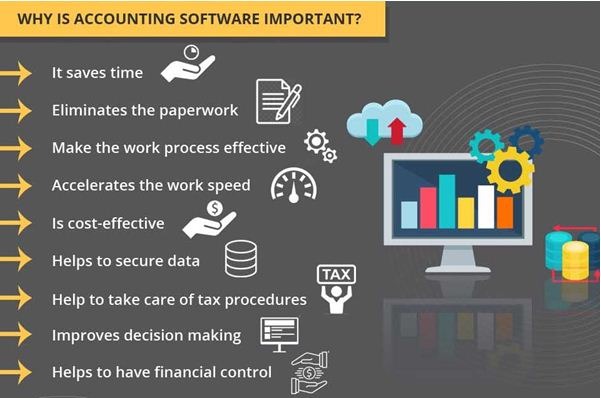
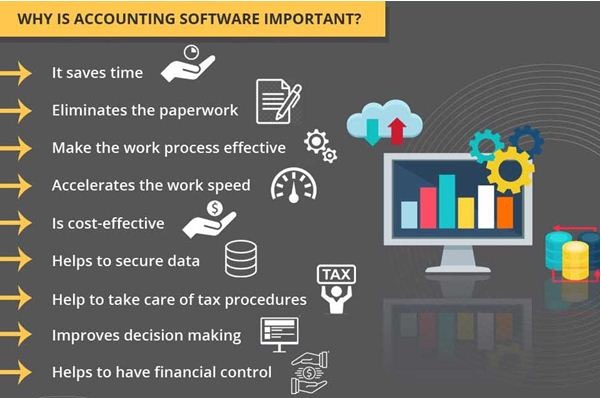
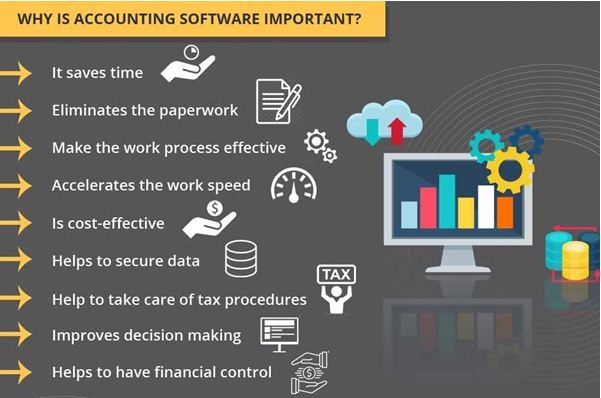
Simplification - Accounting software put control of funds in the hands of a non-accounting crowd, aimed at giving significance to statistics while executing electronic computations. With hardly any training, the company owner can execute all financial transactions and meet the legal requirements from a desktop computer or smartphone, even without having to pay a third party to keep the expenditure in the loop.

Cost reduction - Accounting and finance frameworks simplify key estimates and operating processes and gain a charge of the sales process and you don't need to outsource financial services to an external specialist. They also raise printing and storage prices and store confidential data is safe and controlled locations.

Total financial disclosure - The key advantage of effective accounting processes for an accountant or an auditor is that they avoid expensive and repeated human mistakes. Calculating incorrect quantities or failing to disclose results on time will potentially contribute to a business problem and this is when it is most helpful to optimize calculations.

Read a Press Release on Accounting Software: https://www.360quadrants.com/press-release/360quadrants-releases-best-accounting-software-companies-of-2020