Market Research, Market Size, Market Research Report, Market Share, Market Analysis, Market Growth,

Friday, April 29, 2022

In-depth Analysis of the COVID-19 Impact on Global In Vivo Toxicology Market 2022

Growth Factors Driving the Market: The In Vivo Toxicology Market growth is driven largely by the increasing pharmaceutical R&D activities, innovations in animal models, the development of exclusive in vivo toxicology tests, and the increasing demand for personalized medicine

MarketsandMarkets™ View on Revenue: The global in vivo toxicology market size is projected to reach USD 6.6 billion by 2025 from USD 5.0 billion in 2020, at a CAGR of 5.5% during the forecast period.

In Vivo Toxicology Market

Industry Segmentation in Detailed:

The immunotoxicity segment accounted for the largest share of the in vivo toxicology market.

Based on toxicity endpoint, the global in vivo toxicology market is segmented into immunotoxicity, systemic toxicity, carcinogenicity, genotoxicity, developmental & reproductive toxicity (DART), and other toxicity endpoints (includes organ toxicity, endocrine disruptor toxicity, juvenile toxicity, phototoxicity, ocular toxicity, and skin irritation). In 2019, the immunotoxicity segment accounted for the largest share of the global in vivo toxicology market, followed by the systemic toxicity segment.The rising demand for the development of biologics and biosimilars is driving the growth of the immunotoxicity segment

The chronic test type segment accounted for the largest share of the in vivo toxicology market.

Based on test type, the global in vivo toxicology testing market is segmented into acute, sub-acute, sub-chronic, and chronic test type. The chronic test type segment is expected to dominate the market during the forecast period. In 2019, the chronic test type segment held the largest share of the market, followed by sub-chronic test type.Increasing research on drugs used for longer-duration therapy such as anti-cancer, anti-convulsive, anti-arthritis, and anti-hypertensives drives the growth of the chronic test type market.

The outsourced testing facilities segment accounted for the largest share of the in vivo toxicology market.

Based on the testing facility, the global in vivo toxicology market is segmented into outsourced testing facilities and in-house testing facilities. The outsourced testing facilities segment is expected to dominate the market, by testing facility, over the forecast period. In 2019, the outsourced testing facilities segment held the largest share of the global in vivo toxicology market. The large share of this segment is attributed to the increasing R&D investments and cost-saving strategies of pharmaceutical, biopharmaceutical, and medical devices companies, resulting in increased outsourcing of services to CROs

Download PDF Brochure: https://www.marketsandmarkets.com/pdfdownloadNew.asp?id=105308811

Leading Key Players Analysis:

The major players operating in In Vivo Toxicology Testing Market are by Charles River Laboratories (US), The Jackson Laboratory (US), Envigo (US), Taconic Biosciences, Inc. (US), and JANVIER LABS (France), Thermo Fisher Scientific (US), Danaher Corporation (US), Waters Corporation (US), Agilent Technologies (US), Shimadzu Corporation (Japan), Bruker Corporation (US), PerkinElmer (US). Other prominent players include Merck KGaA (Germany), GE Healthcare (US), and Bio-Rad Laboratories (US), genOway (France), Cyagen Biosciences (US), GVK BIO (India), PolyGene (Switzerland), Crown Biosciences (US), TransCure bioServices (France), Ozgene Pty Ltd. (Australia), Harbour BioMed (US) among others.


Geographical Trends in Detailed:

The global in vivo toxicology market is segmented into North America, Europe, the Asia Pacific, Latin Ametica and Middle East & Africa. In 2019, North America accounted for the largest share of the in vivo toxicology market. The large share of the North America region can be attributed to the presence of major players operating in the in vivo toxicology market in the US, growing biomedical research in the US, and rising preclinical activities by CROs and pharmaceutical companies in the region.


Request Research Sample Pages: https://www.marketsandmarkets.com/requestsampleNew.asp?id=105308811

Wednesday, April 27, 2022

Contract Research Organization Services Market - Emerging Industry Trends and Global Future Forecast

Growth Factors Driving the Market: The Growth in CRO services market can mainly be attributed to factors such as the increasing investment in pharmaceutical R&D, rising number of clinical trials, high cost of in-house drug development (encouraging pharma-biotech companies to opt for outsourcing), and the rising prevalence of orphan and rare diseases (creating new revenue pockets for CROs). Growth in the drugs and biologics market despite the COVID-19 pandemic, the increasing demand for specialized testing services among end users, and the need for novel clinical trial designs for complex cell and gene therapies are also expected to offer a wide range of growth opportunities to players operating in this market.

MarketsandMarkets™ View on Revenue: The Global Contract Research Organization (CROs) Services Market is estimated to grow from USD 115.1 billion by 2027 from USD 68.3 billion in 2022, at a CAGR of 11.0% during the forecast period.

Contract Research Organization (CROs) Services Market


Industry Segmentation in Detailed:

The clinical research services subsegment accounted for the largest share of the type segment in the CRO services market in 2021.

Based on type, the CRO services market is segmented into clinical research services, early-phase development services, laboratory services, consulting services, and data management services. The clinical research services segment accounted for the largest share of this market in 2021. The large share of this segment can primarily be attributed to factors such as the increasing R&D of new drugs and the high cost of clinical trials.

The oncology subsegment accounted for the largest share of the therapeutic area segment in the CRO services market in 2021.

Based on therapeutic area, the CRO services market is segmented into oncology, infectious diseases, neurology, vaccines, cardiovascular system (CVS) disorders, metabolic disorders/endocrinology, immunological disorders, respiratory disorders, psychiatry, dermatology, hematology, ophthalmology, gastrointestinal diseases, genitourinary & women’s health, and other therapeutic areas. The oncology segment accounted for the largest share of the global CRO services market in 2021. The large share of this segment is primarily attributed to the increasing number of drug discovery activities for oncology and the rising prevalence of cancer worldwide.


Download PDF Brochure: https://www.marketsandmarkets.com/pdfdownloadNew.asp?id=167410116

Leading Key Players Analysis:

The Asia Pacific region is the fastest-growing region of the CRO services market.


Key players in the global CRO servicesMarket include IQVIA Inc. (US), Laboratory Corporation of America Holdings (US), PPD, Inc. (a part of Thermo Fisher Scientific, Inc.), ICON plc (Ireland), Charles River Laboratories International, Inc. (US), WuXiAppTec Co., Ltd. (China), Syneos Health Inc. (US), Parexel International Corporation (US).


Geographical Trends in Detailed:

The global CRO services market is segmented into North America, Europe, the Asia Pacific, Latin America, and the Middle East & Africa. The market in the Asia Pacific is estimated to record the highest CAGR during the forecast period. This can be attributed to the fast-growing pharmaceutical industry in the region, favorable government policies, increasing number of pharmaceutical companies establishing their manufacturing facilities in the region, and the lower cost of clinical trials in the region.


Request Research Sample Pages: https://www.marketsandmarkets.com/requestsampleNew.asp?id=167410116

Tuesday, April 26, 2022

Cancer Diagnostics Market - Growth and key Players Analysis and Forecast

Growth Factors Driving the Market:  The Growth of the Cancer Diagnostics Market is driven mainly by increasing incidence of cancer and growth in the number of private diagnostic laboratories.

In an attempt to detect cancer in the early stages and bring down the mortality rate, governments in developed countries and primary care doctors are recommending cancer screening tests for patients. The US Preventive Services Task Force (USPSTF) recommends screening for colorectal cancer starting at 50 years of age to 75 years of age in the US as a means of preventing disease incidence and ensuring early-stage treatment. Canada has also implemented guidelines for biennial colorectal cancer screening for people aged 50 to 74 years.

MarketsandMarkets™ View on Revenue: The global cancer diagnostics market size was valued at USD 17.2 billion in 2021 and is expected to grow at a CAGR of 11.5%

Cancer Diagnostics Market


Industry Segmentation in Detailed:

The consumables segment is expected to grow at the highest CAGR during the forecast period.

Based on the product, the cancer diagnostics market is segmented into consumables and instruments. The consumables segment is projected to witness the highest growth during the forecast period. The repeated purchase and high consumption, and the high prevalence of diseases the major factors supporting the growth of this segment.

The technology segment accounted for the largest share of the cancer diagnostics market.

By technology, the cancer diagnostics market is segmented IVD testing, imaging based and biopsy technique. The IVD testing segment accounted for the largest market share in 2020. The large share of this segment can be attributed to increasing incidence of cancer.

Hospitals for the largest share of the cancer diagnostics market.

Based on end-users, the cancer diagnostics market is segmented into hospitals and diagnostic laboratories. The hospitals segment accounted for the largest share of the cancer diagnostics market in 2020. The increasing number of patients visiting hospitals, rising number of in-house diagnostic procedures performed in hospitals, and growing awareness regarding early diagnosis is are the major driving factor for this market.

Download PDF Brochure: https://www.marketsandmarkets.com/pdfdownloadNew.asp?id=186559121

Leading Key Players Analysis:

Some of the major players operating in this market are GE Healthcare (US), Roche Diagnostics (Switzerland), and Becton, Dickinson and Company (US). In 2020, GE Healthcare held the leading position in the market. The company has a strong geographic presence across the US, Asia, Europe, Middle East and Africa, & the Americas. Moreover, the company’s strong brand recognition and comprehensive product portfolio in the cancer diagnostics market is its key strength. BD held the second position in the cancer diagnostics market in 2020.

Geographical Trends in Detailed:

The cancer diagnostics market is segmented into four major regional segments, namely, North America, Europe, Asia Pacific, and the Rest of the World. In 2020, North America accounted for the largest share of the cancer diagnostics market. The large share of North America can be attributed to factors such as the increasing incidences of cancer, growing awareness early diagnosis and technological advancement.

Request Research Sample Pages: https://www.marketsandmarkets.com/requestsampleNew.asp?id=186559121

Monday, April 25, 2022

Aptamers Market - Developing Regions is Well-Positioned for Strong Growth in the Coming Years

Growth Factors Driving the Market: The Growth of aptamers market is attributed to factors such as increase in number of clinical trials for development of aptamer-based therapeutics, increase in awareness about advantages of aptamers as compared to antibodies, rising investment in pharmaceutical R&D, and rising prevalence of chronic and rare diseases to increase the demand for aptamer-based therapeutics and diagnostics. Growth in the venture capital funding for research on aptamers and growing collaborations with research institutes and pharmaceutical companies are also expected to offer a wide range of growth opportunities to players in the market. On the other hand, low market acceptance as compared to antibodies is likely to restrain the market growth while shortage of skilled & trained professionals may challenge market growth to a certain extent.

MarketsandMarkets™ View on Revenue: The aptamers market valued at an estimated USD 151 million in 2021 and is projected to reach USD 342 million by 2026, at a CAGR of 17.7% during the forecast period.

Aptamers Market


Industry Segmentation in Detailed:

“The therapeutics development segment will continue to dominate the aptamers application market during the forecast period”

Based on the application, the aptamers market is segmented into therapeutics development, research & development, diagnostics, and other applications. In 2020, the therapeutics development segment dominated the market due to the increasing number of clinical trials evaluating aptamers for new therapies and collaborations among aptamer companies & prominent pharmaceutical and biotechnology firms. The diagnostic segment is projected to grow at the highest CAGR due to the increasing prevalence of chronic diseases and the development of new diagnostic kits to detect cancer and other diseases.

"Pharmaceutical & biotechnology companies are the largest end users of aptamers technology"

Based on end user, the global aptamers market is segmented into pharmaceutical companies & biotechnology companies, academic & government research institutes, contract research organizations, and other end users. In 2020, pharmaceutical & biotechnology companies dominated the market owing to the increasing number of market players offering custom aptamers for use in therapeutics development & rising R&D expenditure. The diagnostic segment will record the highest CAGR during the forecast period due to the development of diagnostic tools for cancer and infectious diseases.

“The DNA-based aptamers segment will continue to dominate the aptamers type market during the forecast period"

Based on type, the aptamers market is segmented into DNA aptamers, XNA aptamers, and RNA aptamers. The DNA-based aptamers segment dominated the market in 2020. The large share of this segment is attributed to their lower production cost and higher stability compared to other nucleic acid-based aptamers and the wide availability of DNA aptamers.

Download PDF Brochure: https://www.marketsandmarkets.com/pdfdownloadNew.asp?id=1167

Leading Key Players Analysis:

Some of the key players operating in the aptamers technology market include Aptamer Group (UK), Raptamer Discovery Group (US), SomaLogic Inc., (US), Aptamer Sciences, Inc. (South Korea), Aptagen, LLC (US), Maravai Lifesciences (US), Kaneka Corporation (Japan), NeoVentures Biotechnology Inc. (Canada), Aptus Biotech (Spain), Base Pair Biotechnologies (US), AMSBIO (UK), Novaptech (France), Bio-Techne (US) among others.

Geographical Trends in Detailed:

The global aptamers market is segmented into five major regions—North America, Europe, the Asia Pacific, Latin America, and the Middle East & Africa. In 2020, North America accounted for the largest share of this market. The largest share of North America is attributed to the availability of funds to develop innovative technologies, the presence of prominent market players, and growing collaborations among companies. The Asia Pacific market is estimated to record the highest CAGR during the forecast period. This is attributed to the rising R&D activities on aptamers, the development of aptamer-based products, and the rising focus on drug discovery and development.

Request Research Sample Pages: https://www.marketsandmarkets.com/requestsampleNew.asp?id=1167

Friday, April 22, 2022

Veterinary Equipment and Disposables Market - In Depth Analysis of Industry Segments, Growth Drivers and Key Players

According to a new market research report Veterinary Equipment and Disposables Market by Product (Consumables, Anesthesia Machines, Ventilators, Patient Monitoring, Oxygen Masks, Infusion Pumps), Animal (Cats, Dogs, Equines, Bovines), End User (Hospitals, Clinics) – Global Forecast to 2023″, published by MarketsandMarkets™, the global Veterinary Equipment Market is projected to reach USD 2.40 billion by 2023 from USD 1.63 billion in 2018, at a CAGR of 8.0% during the forecast period of 2018 to 2023.

The Veterinary equipment and disposables are used in monitoring, surgeries, and the treatment of diseases in animals. Rising animal health expenditure and growing demand for pet insurance, increasing number of veterinary practitioners in developed regions, and growth in the companion animals market are the primary drivers for the global veterinary equipment market and veterinary disposables market during the forecast period.

Download PDF Brochure: https://www.marketsandmarkets.com/pdfdownloadNew.asp?id=14169630

Veterinary Equipment and Disposables Market

Growth in the companion animal population;


The adoption of companion animals has grown globally due to the positive health benefits associated with them—reduced cardiac arrhythmias, normalization of blood pressure, decreased anxiety, greater psychological stability, and improved wellbeing. According to the APPA National Pet Owners Survey 2017–2018, the canine population in the US increased from 69.9 million in 2012 to 89.7 million in 2016, while the feline population increased from 74.05 million in 2012 to 94.2 million in 2016. According to the European Pet Food Industry Federation (FEDIAF), the canine population in Germany increased from 5.30 million in 2012 to 8.66 million in 2016, whereas the feline population increased from 8.20 million in 2012 to 13.40 million in 2016.

Emerging markets such as Brazil, China, India, and Mexico are also witnessing growth in animal ownership. According to the India International Pet Trade Fair (IIPTF), the number of pets increased from 11 million in 2014 to 15 million in 2016. Approximately 600,000 pets are adopted every year in India. Such trends are expected to support the growth of the animal health industry, which, in turn, will drive the growth of dependent industries such as veterinary equipment market and veterinary disposables market.

The critical care consumables segment is expected to account for the largest share of the Veterinary Equipment and Disposables Market in 2018. 

On the basis of type, the critical care consumables segment accounted for the largest share of the global Veterinary Equipment and Disposables Market. The large share of consumables can be attributed to the large number of consumables required and consumed in almost every veterinary care process, as opposed to the one-time cost of capital equipment.

The small companion animals will continue to dominate the Veterinary Equipment and Disposables Market during the forecast period.

Based on animal, the small companion animals’ segment will dominate the Veterinary Equipment and Disposables Market in 2023. The large share of this segment can be attributed to the high adoption of companion animals and rising expenditure on animal health.

The veterinary clinics segment is estimated to hold the largest market share of the Veterinary Equipment and Disposables Market in 2023.

Based on end user, veterinary clinics are estimated to hold the largest share of the Veterinary Equipment and Disposables Market in 2023. The large share of this segment can be attributed to the growing number of patient visits along with the increasing number of private clinical practices and increasing practice revenues.

Request Research Sample Pages: https://www.marketsandmarkets.com/requestsampleNew.asp?id=14169630

North America will dominate the market in 2023. 

North America is estimated to hold the largest share of the Veterinary Equipment and Disposables Market during the forecast period, followed by Europe and the Asia Pacific. Factors such as the increasing number of companion animals, rising companion animal healthcare expenditure, rise in the number of livestock animals in North America (primarily due to the increasing consumption of meat and dairy products), and growth in the pet insurance market are responsible for the region’s large share in the global Veterinary Equipment and Disposables Market.

The prominent players in the Veterinary Equipment and Disposables Market are Mindray Medical International Limited (China), Smiths Group plc (UK), Nonin Medical (US), Digicare Biomedical Technology, Inc. (US), B. Braun Melsungen AG (Germany), Henry Schein (US), Vetland Medical Sales and Services, LLC (US), Hallowell Engineering & Manufacturing Corporation (US), Infiniti Medical, LLC (US), DRE Veterinary (US), and Midmark Corporation (US).

Speak to Analyst: https://www.marketsandmarkets.com/speaktoanalystNew.asp?id=14169630

Global Back-end Revenue Cycle Management Market Trends and Industry Analysis Report

The research report "Back-End Revenue Cycle Management Market by Product and Services (Claim Processing, Denial Management, Payment Integrity), Delivery Mode (On-Premise, Cloud Based), End-User (Payer, Provider (Inpatient, Outpatient)), and Region - Global Forecast to 2027", is projected to reach USD 12.2 billion by 2027 from USD 8.6 billion in 2019, at a CAGR of 4.4%.

Growing importance of denials management;

To reduce costs and maximize profits, insurance companies are increasingly denying claims as well as coverage to patients being treated for chronic or persistent illnesses. This is putting an extra burden on healthcare providers to manage operating costs, and in turn is supporting the adoption of back-end revenue cycle management solutions (with a growing number of healthcare providers focusing on properly analyzing denied claims and appealing them).

Many healthcare providers across the globe still use manual and paper-oriented approaches to manage denials. This results in errors, delayed follow-ups, and miscommunication between healthcare providers and insurance companies. The use of back-end revenue cycle management solutions over manual and paper-oriented approaches can not only help healthcare providers overcome these issues but also help them save significant costs. As a result, the demand for back-end revenue cycle management solutions is expected to increase among end users during the forecast period.

Download PDF Brochure: https://www.marketsandmarkets.com/pdfdownloadNew.asp?id=204439794

Back-end Revenue Cycle Management Market


Leading Key Players and Analysis:

Athenahealth (US), Cerner Corporation (US), Allscripts Healthcare Solutions, Inc. (US), eClinicalWorks (US), Optum, Inc. (US), McKesson Corporation (US), Conifer Health Solutions (US), GeBBs Healthcare Solutions (US), The SSI Group (US), GE Healthcare (US), nThrive (US), DST Systems (US), Cognizant Technology Solutions (US), and Quest Diagnostics (US) are the key players in the Back-End RCM Market.

Cerner has a strong foothold in the back-end revenue cycle management market. The company caters to the healthcare technology and financial management needs of its global customers. Cerner focuses on research and development activities, deploying products, and acquisitions to enhance its market presence. For instance, in the past three years, the company deployed more than 15 back-end revenue cycle management solutions across various hospitals, care centers, and medical centers. The acquisition of Siemens Health Services in January 2015 further strengthened its back-end revenue cycle management portfolio.

Geographical Analysis in Detailed?

The back-end revenue cycle management market is divided into North America, Europe, Asia, and the Rest of the World (RoW). North America is expected to account for the largest share in 2018 owing to factors such as growing HCIT investments in the region and the presence of regulatory mandates. North America is followed by Europe and Asia. The market in Asia is relatively nascent; however, it is projected to be the fastest-growing market during the forecast period.

Request Sample Pages: https://www.marketsandmarkets.com/requestsampleNew.asp?id=204439794

Industry Segmentation:

The Services segment to dominate the back-end revenue cycle management market.

By product & service, segmented into software and services. The services segment is expected to account for the largest share of the Back-End RCM Market in 2018. The large share of this segment can be attributed to the recurring nature of services such as training and development, installation, software upgrades, consulting, and maintenance. However, due to the need for periodic software upgrades, the software segment is expected to witness the highest growth during the forecast period.

The cloud-based systems to register the highest CAGR during the forecast period

On the basis of delivery mode, segmented into on-premise and cloud-based systems. The cloud-based segment is expected to register the highest CAGR of the back-end revenue cycle management market during the forecast period. Growth in this segment can be attributed to the comparatively lower capital expenses and operational costs incurred in this model, alongside its scalability, flexibility, and affordability.

Speak to Analyst: https://www.marketsandmarkets.com/speaktoanalystNew.asp?id=204439794

Wednesday, April 20, 2022

Orthodontic Supplies Market - Growth by Top Key Players, Application and Forecast Analysis

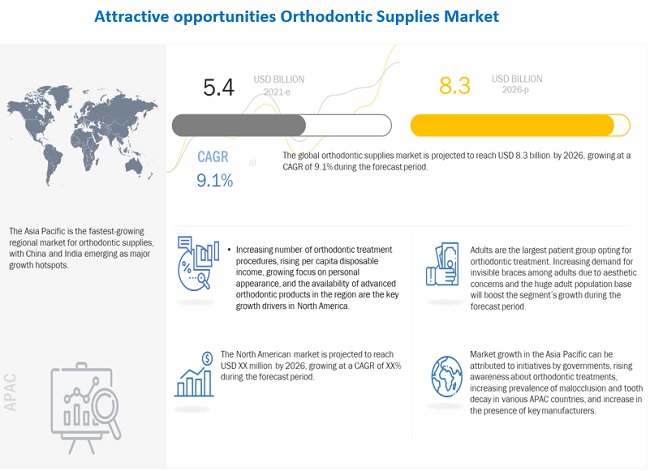
According to the new market research report Orthodontic Supplies Market by Product (Braces (Removable, Fixed), Brackets (Ligating, Lingual, Metal), Archwires (Ni-Ti, steel), Anchorage, Ligature(Elastomeric, wire), Patient(Adult, Children), Users(Hospitals, Clinics, OTC) – Global Forecast to 2026″, published by MarketsandMarkets™, the Orthodontic Products Market is projected to reach USD 8.3 billion by 2026 from USD 5.4 billion in 2021, at a CAGR of 9.1% during the forecast period.

Opportunity: Emerging markets in APAC and RoW;

Emerging markets such as China, India, Brazil, and Mexico are expected to offer significant growth opportunities for players in the orthodontic supplies market. Growth in these markets can be attributed to the presence of a large patient population, rising disposable incomes among the middle-class population, and the increasing focus of public and private organizations on increasing the awareness about orthodontic treatments and dental hygiene. To leverage the significant growth opportunities in emerging countries, players are increasingly focusing on undertaking strategic developments to increase their presence in these markets and tap a large number of customers.

Along with this, many players are focusing on strategic investments to develop end-to-end digital software solutions with 3D digital scanning, diagnostics, outcome visualization, treatment planning, custom appliances, and custom lab products. For instance, in September 2020, Light Force Orthodontics, a manufacturer of customizable 3D-printed bracket systems, raised USD 14 million from Series B round led by Tyche Partners with follow-on investment from Matrix Partners and AM Ventures.

This 3D printing technology helps to create customized braces for each patient. This plays a critical role in significantly reducing the number of visits to orthodontic clinics for the adjustment of braces. These developments are expected to provide a wide range of opportunities for players to capture a large customer base in the orthopedic supplies market.

Download PDF Brochure: https://www.marketsandmarkets.com/pdfdownloadNew.asp?id=236529189

Orthodontic Supplies Market


The Increasing prevalence of malocclusion, rising emphasis on effective orthodontic treatment and t the initiatives undertaken by governments to increase the awareness about orthodontic treatments are fueling the demand for orthodontic supplies during the forecast period.

The orthodontic supplies market includes major Tier I and II suppliers of orthodontic products are 3M (US), Envista Holdings Corporation (US), Dentsply Sirona (US), Align Technology (US), American Orthodontics (US), Rocky Mountain Orthodontics (US), G&H Orthodontics (US), Dentaurum (Germany), TP Orthodontics (US), Great Lakes Dental Technologies (US), DB Orthodontics (UK), Morelli Orthodontics (Brazil), ClearCorrect (US), and Ultradent Products (US).

These suppliers have their manufacturing facilities spread across regions such as North America and Europe. COVID-19 has impacted their businesses as well. Due to the pandemic, the orthodontic supplies market experienced short-term negative growth, which can be attributed to a sharp reduction in access to hospital and dental clinics and the temporarily shutdown of orthodontic clinics.

Orthodontic practices around the globe are facing challenges amid the pandemic. The adoption of strict protocols outside and inside dental clinics, increasing usage of teleorthodontics in case of urgent appointments, and opting for minimal orthodontic treatment procedures by many orthodontic clinics are likely to have a positive impact on the market. Moreover, post lockdown, as dental practices reopen, it is expected that patient volumes are anticipated to rebound at a higher pace.

Request Sample Pages: https://www.marketsandmarkets.com/requestsampleNew.asp?id=236529189

Demand for invisible braces among the target population due to their aesthetic benefits drives the growth of removable braces

Removable braces offer advantages over traditional braces, including easy removal of braces, reduced risk of periodontal diseases & tooth decay, and enhanced comfort. Factors such as strong focus on product innovation by players and growing awareness about the benefits associated with removable braces and the growing demand for invisible braces among teens and adults due to their aesthetic benefits is augumenting the growth of removable braces.

Asia Pacific likely to emerge as the fastest growing orthodontic supplies market, globally

Geographically, the emerging Asian countries, such as China, India, Japan and Singapore, are offering high-growth opportunities for market players. The Asia Pacific point of care market is projected to grow at the highest CAGR of 10.8% from 2021 to 2026. Expansion of healthcare infrastructure and increase in disposable personal income, increase patient population with malocclusion and tooth decay are factors likely to support the growth of market in the region. Moreover, the growing focus toward aesthetics products among adults and emergence of small manufacturers in the market are driving the growth of the APAC orthodontic supplies market.

Prominent players in this market are 3M (US), Envista Holdings Corporation (US), Dentsply Sirona (US), Align Technology (US), Rocky Mountain Orthodontics (US), G&H Orthodontics (US), Dentaurum (Germany), TP Orthodontics (US), Great Lakes Dental Technologies (US), DB Orthodontics (UK), among others.

Speak to Analyst: https://www.marketsandmarkets.com/speaktoanalystNew.asp?id=236529189

Tuesday, April 19, 2022

Hernia Repair Market Analysis 2022 - Globally by Key Manufacturers, Countries, Type, Application and Forecast

According to the new market research report Hernia Repair Market by Product (Mesh (Synthetic, Biologic), Mesh Fixation (Suture, Tack and Glue Applicator)), Surgery Type (Inguinal, Incisional/Ventral, Umbilical, Femoral), and Geography (America, Europe, Asia Pacific) – Forecast to 2023″, published by MarketsandMarkets™, the hernia mesh market is projected to reach USD 4.75 Billion by 2023 from USD 4.09 Billion in 2018, at a CAGR of 3.0% during the forecast period.

Recent Developments:

– In 2017, BD acquired C. R. Bard. With this acquisition, BD entered the hernia repair business. The acquisition is expected to help C. R. Bard to increase its geographic presence in terms of both—sales and operations and maintain its market position.

– In 2017, Allergan acquired LifeCell Corporation. This acquisition expanded its medical aesthetic products portfolio by the addition of ALLODERM and STRATTICE.

– In June 2017, W. L. Gore GORE launched SYNECOR Preperitoneal Biomaterial. The newly launched product helped the company to broaden its product offerings in the hernia market

– In 2016, B. Braun opened its new subsidiary in Zambia named ‘B. Braun Medical Zambia Limited’ which will help the company to establish a strong foothold in Southern Africa.

Download PDF Brochure: https://www.marketsandmarkets.com/pdfdownloadNew.asp?id=203245450

Hernia Repair Market


The rising adoption of mesh in hernia repair surgeries, rising geriatric population, new product developments, and favorable reimbursement scenario in developed countries are the major factors driving the growth of this market.

The report analyzes and studies the patient population affected with hernia in the US, Canada, Germany, France, the UK, Japan, China, and India. Along with patient population, the report studies the adoption of synthetic and biologic mesh in hernia repair surgeries and the adoption of suture, tack, and glue applicators for mesh fixation.

The hernia mesh segment is estimated to account for the largest share of the hernia mesh market

On the basis of product, the hernia repair market is segmented into mesh and mesh fixators. A mesh is used for reinforcing weak spots in the muscle while repairing the hernia. Mesh fixators are used to fix the mesh in its place to avoid displacement. In 2018, the hernia mesh segment is expected to account for the largest share of the market. This large share can be attributed to the higher prices of meshes compared to mesh fixators.

In 2018, tack applicators to account for the largest share of the mesh fixators market

The hernia mesh fixators market is segmented into sutures, tack applicators, and glue applicators. Among these, sutures is the most common type of mesh fixator, followed by tack. However, due to the higher price of tacks, the tack applicators segment is expected to account for the largest share in the mesh fixators market in 2018. While the rising adoption of surgical glue as mesh fixators makes glue applicators the fastest growing segment of the mesh fixators market.

Request Sample Pages: https://www.marketsandmarkets.com/requestsampleNew.asp?id=203245450

In 2018, North America is projected to account for the largest market share

The global hernia repair market is segmented into four major regions, namely, North America, Europe, the Asia Pacific, and the Rest of the World (RoW). In 2018, North America is estimated to account for the largest market for hernia mesh devices. The large share of North America in this market can be attributed to the strong demand for and adoption of hernia repair in the US, presence of a large pool of hernia patients, and an efficient and favorable healthcare system are supporting the growth of the hernia mesh market in North America.

The major players in the hernia repair market profiled in this report are Covidien ( Part of Medtronic) (Ireland), Ethicon (Part of Johnson & Johnson) (US), B. Braun (Germany), C.R. Bard (Part of Becton Dickinson) (US), W. L. Gore (US), LifeCell (Part of Allergan) (Ireland), Maquet (Part of Getinge) (Sweden), Cook Medical (US), Integra (US), DIPROMED (Italy), FEG (Germany), Cousin Biotech (France), Herniamesh (Italy), Aspide Medical (France), TransEasy Medical (China), and Via Surgical (Israel).

Speak to Analyst: https://www.marketsandmarkets.com/speaktoanalystNew.asp?id=203245450

Global Biobanking Market Revenue, Demand, Opportunity, Segment and Key Trends 2021

According to the new market research report “Biobanking Market by Product and Service(Equipment, Consumables, Services, Software), Sample Type (Blood Products, Human Tissues, Cell Lines, Nucleic Acids), Application( Regenerative Medicine, Life Science, Clinical Research) – Global Forecast”, published by MarketsandMarkets™, the biobanking devices market is expected to reach USD 2.69 Billion by 2022 from USD 1.85 Billion in 2017, at a CAGR of 7.8%

Regenerative medicine applications for biobanking market will drive the market;

Biobanking Market plays an integral role in advancing biomedical and translational research, through the collection and preservation of biological samples, such as blood, tissues, and nucleic acids, which are then made available for use in research to discover disease-relevant biomarkers; this is further used for diagnosis, prognosis, and predicting drug responses. Growth in the number of research activities in this segment forms a major driver for the market. The availability of government funding for regenerative medicine, stem cell therapeutics, and cell & gene therapy is supporting research activities in this segment. Apart from this, the increasing trend of cord blood banking will also aid growth of this market segment. Future prospects including advancements in orthopedic procedures with the use of stem cells are expected to further support market growth for regenerative medicine

Download PDF Brochurehttps://www.marketsandmarkets.com/pdfdownloadNew.asp?id=594

Biobanking Market


Major Biobanking Market Developments;

– In 2017, Brooks Automation, Inc. (U.S.) launched BioStore IIIv, BioStudies Biobank Data Management, FluidX, IntelliXcap Decapper systems to strengthen its product portfolio in biobanking segment.

– In 2016, Thermo Fisher Scientific Inc. (U.S.) entered into a partnership with Hamilton Storage (U.S.) to strengthened Thermo Fisher’s presence in the market.

– In 2015, Panasonic Healthcare Holdings (Japan) launched MDF-DU900V VIP -86°C Upright Freezer.

Based on region, the biobanking market is segmented into North America, Europe, Asia-Pacific, and Rest of the World (RoW). North America is expected to dominate the market in 2017, this is attributed to factors like increasing research activities in regenerative medicine, cell and gene therapy; growing interest in personalized medicine and biomarker discovery; increasing number of biotechnology and pharmaceutical companies; and rising investments in genomics and proteomics research in the region as compared to other regions.

Key players in the biobanking market include Thermo Fisher Scientific Inc. (U.S.), Tecan Group Ltd. (Switzerland), Qiagen N.V. (Germany), Hamilton Company (U.S.), Brooks Automation (U.S.), TTP Labtech Ltd (U.K.), VWR Corporation (U.S.), Promega Corporation (U.S.), Worthington Industries [(Taylor Wharton, U.S.)], Chart Industries (U.S.), Becton, Dickinson and Company (U.S.), Merck KGaA (Germany), Micronic (Netherlands), LVL Technologies GmbH & Co. KG (Germany), Panasonic Healthcare Holdings Co. Ltd (Japan).

Request Sample Pageshttps://www.marketsandmarkets.com/requestsampleNew.asp?id=594

The equipment segment is expected to dominate the biobanking devices market.

By product and service, the biobanking market is segmented into equipment, consumables, services, and software. The equipment segment is expected to dominate the global market in 2017. Rising number of biobanks and the increasing number of biospecimens are factors increasing the demand for biobanking equipment.

Blood products are estimated to command the largest biobanking devices market share.

The biobanking market is segmented by sample type into blood products, human tissues, nucleic acids, human waste products, cell lines, and biological fluids. In 2017, the blood products segment is expected to account for the largest share of the market, by sample type. Rising incidence of blood disorders and the increasing demand for various types of blood products across the globe are driving the growth of this segment.

Speak to Analyst: https://www.marketsandmarkets.com/speaktoanalystNew.asp?id=594

Monday, April 18, 2022

Global Single-cell Analysis Market 2022 - Research, Industry Trends, Supply, Sales, Demands, Analysis & Insights

According to the new market research report Single-cell Analysis Market by Cell Type (Human, Animal, Microbial), Product (Consumables, Instrument), Technique (Flow Cytometry, NGS, PCR, Microscopy, MS), Application (Research, Medical), End User (Pharma, Biotech, Hospitals) – Global Forecast to 2026″, published by MarketsandMarkets™, is projected to reach USD 6.3 billion by 2026 from USD 3.1 billion in 2021, at a CAGR of 15.1% during the forecast period.

Growth Driver: Growing prevalence of cancer;

One of the most important application areas of single-cell analysis is cancer genomics. According to GLOBOCAN, the number of cancer cases will rise to approximately 30 million by 2040 from 19.3 million cases and 10 million cancer deaths in 2020. The growth in the prevalence of this disease has resulted in a need to conduct extensive research for diagnosis and treatment; single-cell analysis forms an important part of this research. The analysis of individual cells enables the correct diagnosis of diseases and monitoring of treatment efficacy. Single-cell analysis aids in the enumeration of helper T-cells, determination of DNA content, and monitoring the proliferation of tumor cells in breast cancer and other malignancies.

Recent Developments:

- In March 2021, Beckman Coulter (a subsidiary of Danaher Corporation) launched the CytoFLEX SRT Benchtop Sorter that features expanded laser and color options for use in labs of all sizes.

- In March 2020, Fluidigm Corporation (US) opened a new Center of Excellence (CoE) for Imaging Mass Cytometry (IMC) in Singapore, together with the Singapore Immunology Network (SIgN), part of the Agency for Science, Technology and Research..

Download PDF Brochure: https://www.marketsandmarkets.com/pdfdownloadNew.asp?id=171955254

Single-cell Analysis Market

The Growth in the single-cell analysis market is driven by factors such as technological advancements in single-cell analysis products coupled with increasing R&D in the pharmaceutical and biotechnology industries, growing focus on personalized medicine, growth in stem cell research, and the rising prevalence of cancer.

The consumables segment accounted for the largest share of the product segment in the single-cell analysis market in 2020.

Consumables accounted for the largest share of the market in 2020. The large share of this segment can primarily be attributed to the frequent purchase of these products compared to instruments, which are considered a one-time investment. The wide applications of consumables in research and genetic exploration, exosome analysis, and isolation of RNA and DNA are also expected to drive market growth.

The research applications segment accounted for the largest share of the application segment in the market in 2020

Based on applications, the single-cell analysis market is segmented into research and medical applications. The research applications segment accounted for the largest share of the market in 2020. Increasing government initiatives in stem cell research and the wide usage of single-cell analysis in cancer research are the major factors driving the growth of the research applications segment.

Request Sample Pages: https://www.marketsandmarkets.com/requestsampleNew.asp?id=171955254

The Asia Pacific region is the fastest-growing region of the market in 2020.

The market in the Asia Pacific is expected to grow at the highest CAGR of 17.4% during the forecast period. This can be attributed to the fast-growing pharmaceutical industry in this region, rising geriatric population, rising prevalence of cancer, and increasing government initiatives.

The prominent players in the single-cell analysis market are Becton, Dickinson and Company (US), Danaher Corporation (US), Merck KGAA (Germany), QIAGEN N.V. (Netherlands), Thermo Fisher Scientific, Inc. (US), Promega Corporation (US), Illumina, Inc. (US), Fluidigm Corporation (US), 10X Genomics (US), and Corning Incorporated (US).

Speak to Analyst: https://www.marketsandmarkets.com/speaktoanalystNew.asp?id=171955254