Market Research, Market Size, Market Research Report, Market Share, Market Analysis, Market Growth,

Showing posts with label market research. Show all posts

Friday, April 22, 2022

Veterinary Equipment and Disposables Market - In Depth Analysis of Industry Segments, Growth Drivers and Key Players

According to a new market research report “Veterinary Equipment and Disposables Market by Product (Consumables, Anesthesia Machines, Ventilators, Patient Monitoring, Oxygen Masks, Infusion Pumps), Animal (Cats, Dogs, Equines, Bovines), End User (Hospitals, Clinics) – Global Forecast to 2023″, published by MarketsandMarkets™, the global Veterinary Equipment Market is projected to reach USD 2.40 billion by 2023 from USD 1.63 billion in 2018, at a CAGR of 8.0% during the forecast period of 2018 to 2023.

The Veterinary equipment and disposables are used in monitoring, surgeries, and the treatment of diseases in animals. Rising animal health expenditure and growing demand for pet insurance, increasing number of veterinary practitioners in developed regions, and growth in the companion animals market are the primary drivers for the global veterinary equipment market and veterinary disposables market during the forecast period.

Download PDF Brochure: https://www.marketsandmarkets.com/pdfdownloadNew.asp?id=14169630

Veterinary Equipment and Disposables Market

Growth in the companion animal population;


The adoption of companion animals has grown globally due to the positive health benefits associated with them—reduced cardiac arrhythmias, normalization of blood pressure, decreased anxiety, greater psychological stability, and improved wellbeing. According to the APPA National Pet Owners Survey 2017–2018, the canine population in the US increased from 69.9 million in 2012 to 89.7 million in 2016, while the feline population increased from 74.05 million in 2012 to 94.2 million in 2016. According to the European Pet Food Industry Federation (FEDIAF), the canine population in Germany increased from 5.30 million in 2012 to 8.66 million in 2016, whereas the feline population increased from 8.20 million in 2012 to 13.40 million in 2016.

Emerging markets such as Brazil, China, India, and Mexico are also witnessing growth in animal ownership. According to the India International Pet Trade Fair (IIPTF), the number of pets increased from 11 million in 2014 to 15 million in 2016. Approximately 600,000 pets are adopted every year in India. Such trends are expected to support the growth of the animal health industry, which, in turn, will drive the growth of dependent industries such as veterinary equipment market and veterinary disposables market.

The critical care consumables segment is expected to account for the largest share of the Veterinary Equipment and Disposables Market in 2018. 

On the basis of type, the critical care consumables segment accounted for the largest share of the global Veterinary Equipment and Disposables Market. The large share of consumables can be attributed to the large number of consumables required and consumed in almost every veterinary care process, as opposed to the one-time cost of capital equipment.

The small companion animals will continue to dominate the Veterinary Equipment and Disposables Market during the forecast period.

Based on animal, the small companion animals’ segment will dominate the Veterinary Equipment and Disposables Market in 2023. The large share of this segment can be attributed to the high adoption of companion animals and rising expenditure on animal health.

The veterinary clinics segment is estimated to hold the largest market share of the Veterinary Equipment and Disposables Market in 2023.

Based on end user, veterinary clinics are estimated to hold the largest share of the Veterinary Equipment and Disposables Market in 2023. The large share of this segment can be attributed to the growing number of patient visits along with the increasing number of private clinical practices and increasing practice revenues.

Request Research Sample Pages: https://www.marketsandmarkets.com/requestsampleNew.asp?id=14169630

North America will dominate the market in 2023. 

North America is estimated to hold the largest share of the Veterinary Equipment and Disposables Market during the forecast period, followed by Europe and the Asia Pacific. Factors such as the increasing number of companion animals, rising companion animal healthcare expenditure, rise in the number of livestock animals in North America (primarily due to the increasing consumption of meat and dairy products), and growth in the pet insurance market are responsible for the region’s large share in the global Veterinary Equipment and Disposables Market.

The prominent players in the Veterinary Equipment and Disposables Market are Mindray Medical International Limited (China), Smiths Group plc (UK), Nonin Medical (US), Digicare Biomedical Technology, Inc. (US), B. Braun Melsungen AG (Germany), Henry Schein (US), Vetland Medical Sales and Services, LLC (US), Hallowell Engineering & Manufacturing Corporation (US), Infiniti Medical, LLC (US), DRE Veterinary (US), and Midmark Corporation (US).

Speak to Analyst: https://www.marketsandmarkets.com/speaktoanalystNew.asp?id=14169630

Monday, April 18, 2022

Body Composition Analyzers Market - by Global In-depth Analysis, Regional Outlook, Latest Trend and Forecast

According to the new market research report “Body Composition Analyzers Market by Product (Bio-impedance analyzer/DEXA/Skinfold calipers/ADP/Hydrostatic weighing), & End-users (Hospitals/Fitness & wellness centers/Academic & Research Center/Home-users) – Analysis & Global Forecast”, published by MarketsandMarkets™, is poised to reach USD 668.16 Million, growing at a CAGR of 12.7%.

The Body composition analysis is the process to evaluate the amount of fat, muscle, and bone in the body. It gives the precise measurement of body fat in relation to lean body mass. Evaluation of body composition is essential in order to determine the risks associated with high or low levels of body fat. The growth of the overall body composition analyzers market can be contributed to rise in obese population across the globe, growing health and fitness consciousness among people, increasing government initiatives to encourage physical activity and technological advancements. In the coming years, the body composition analyzers market is expected to witness the highest growth rate in the Asia-Pacific region. North America is expected to account for the largest share of the global body composition analyzers market. However, inconsistency in the accuracy of different analyzers and high cost of equipment is likely to restrain the growth of the market during the forecast period.

Download PDF Brochure: https://www.marketsandmarkets.com/pdfdownloadNew.asp?id=248209133

Body Composition Analyzers Market

Increasing adoption of body composition analyzers to assess the nutritional status in patients is driving the growth of this market;

Hospitals;

In hospitals, body composition analysis is majorly used for the diagnosis of osteoporosis. For this application, DEXA is utilized to measure bone density for diagnosing osteoporosis and assessing the risk of developing fractures. As a result, the growing prevalence of osteoporosis is expected to increase the adoption of DEXA in various hospitals. Moreover, various hospitals across the globe, such as the Jackson Hospital (U.S.), Ramsay Health Care (U.K.), Apollo Hospitals (India), and Elkhart General Hospital (U.S.), have now included body composition testing as a part of their patient care and wellness programs. Such developments are expected to support the growth of this end-user segment in the coming years

Fitness clubs and wellness centers;

Over the past few years, the number of fitness clubs has increased significantly as a result of the growing focus on health and fitness among people. At gyms and wellness centers, body composition analyzers not only measure the amount of body fat for weight loss but also provide complete body composition assessment to maintain health.

Request Sample Pages: https://www.marketsandmarkets.com/requestsampleNew.asp?id=248209133

The global body composition analyzers market is segmented on the basis of product type, end users and region.

Based on product, the market is segmented into bio-impedance analyzer, dual energy X-ray absorptiometry (DEXA), skin fold Calipers, air displacement plethysmography (ADP) and hydrostatic weighing. The bio-impedance analyzer is expected to account for the largest share of the body composition analyzers market, by product in 2016 and is expected to grow at highest CAGR. This large share can be attributed to the simplicity, low cost, and better accuracy as compared to other body composition analyzers.

Based on end users, the market is segmented into hospitals, fitness clubs and wellness centers, academic and research centers. In 2016, hospitals segment is estimated to account for the largest share of the body composition analyzer market, by end users in 2016 and is expected to grow at highest CAGR. The growth of this segment can be attributed to the rise in osteoporosis cases, increasing adoption of body composition analyzers to assess the nutritional status in patients and increasing health consciousness among masses.

Speak to Analyst: https://www.marketsandmarkets.com/speaktoanalystNew.asp?id=248209133

basis of region, the Body Composition Analyzers Market is divided into North America, Europe, Asia-Pacific, and the Rest of the World (RoW). In 2016, North America is expected to account for the largest share of the body composition analyzer market. Its large share can be attributed to rising obesity rates and increasing health clubs and fitness centers in the U.S. However, the Asia-Pacific market is slated to grow at the highest CAGR during the forecast period due to rising trend of overweight and obesity in China, and foothold of local players in Japan.

The major players in body composition analyzers market include InBody Co., Ltd (South Korea), Tanita Corporation (Japan), Omron Corporation (Japan), Hologic, Inc. (U.S.) and GE Healthcare (U.S.) among others.

Friday, March 4, 2022

Global Allergy Diagnostics Market Size, Status, Overview and Future Forecast

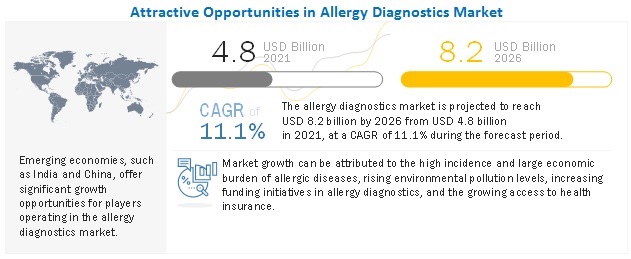
The Research Report on "Allergy Diagnostics Market by Product & Service (Consumables, Instruments (Immunoassay Analyzer, ELISA Analyzer, Luminometer), Service), Allergen (Food, Inhaled, Drug), Test Type (In Vivo, In Vitro), End User (Diagnostic Laboratories) - Global Forecast to 2026" published by MarketsandMarkets, is projected to reach USD 8.2 billion by 2026 from USD 4.8 billion in 2021, at a CAGR of 11.1% from 2021 to 2026.

Growth Drivers : Rising environmental pollution levels;

Exposure to indoor and outdoor air pollutants, allergens, and occupational exposure are the major risk factors causing chronic respiratory diseases. The prevalence of allergic disorders among the urban population is higher than those living in rural areas due to the higher exposure to environmental pollutants in cities (as a result of vehicular pollution and industrial activities).

As per the WHO, more than 80% of people living in urban areas are exposed to air quality levels that exceed the WHO safety limits; though this is a global trend, its effects are more severe in the urban areas of low-income countries. This is a major indicator for the growth of the allergy diagnostics market, as air pollution from motor vehicles has been indicated as one of the major risk factors responsible for allergic diseases.

Epidemiological and toxicological research reveals a causal relationship between air pollution and the increased incidence of asthma, allergic rhinitis, and other allergic disorders. Studies have also demonstrated a significant increase in the incidence and exacerbation of asthma in urban locations with elevated PM 2.5 (particulate matter of size 2.5 micrometers or less), nitrogen dioxide, and ozone concentrations.

Download PDF Brochure: https://www.marketsandmarkets.com/pdfdownloadNew.asp?id=232871701

Allergy Diagnostics Market

Industry Segmentation In Detailed:

“Consumables are expected to hold the largest share of the allergy diagnostics market”

Based on product & service, segmented into consumables, instruments, and services. In 2020, the consumables segment accounted for the largest share of the allergy diagnostics market. The large share of the consumables segment can be attributed to the increasing cases of allergies and the need for rapid tests to diagnose allergic conditions. The consumables segment is also expected to witness significant growth during the forecast period.

“In vivo tests are expected to hold the largest share of the allergy diagnostics market”

Based on test type, segmented into in vivo tests and in vitro tests. In 2020, the in vivo tests segment accounted for the largest share of the allergy diagnostics market. The growth of this segment is mainly driven by the increasing adoption of various in vivo tests, such as skin prick tests. These tests are dependable, safe, convenient, and cost-effective, as compared to in vitro tests.

“Inhaled allergens are expected to hold the largest share of the allergy diagnostics market”

Based on allergens, segmented into inhaled allergens, food allergens, drug allergens, and other allergens. In 2020, the inhaled allergens segment accounted for the largest share of the allergy diagnostics market due to the increasing environmental pollution and rising pollen coupled with other factors such as fungus, mold, and dust.

Request Sample Pages: https://www.marketsandmarkets.com/requestsampleNew.asp?id=232871701

Leading Key Players and Analysis:

The major players operating in Allergy Diagnostics Market are Thermo Fisher Scientific Inc., (US), Siemens Healthineers (Germany), Danaher (US), Omega Diagnostics Group PLC (UK), bioMérieux SA (France), Romer Labs Division Holding (Austria), EUROIMMUN Medizinische Labordiagnostika AG (Germany), HollisterStier Allergy (US), NEOGEN Corporation (US), Eurofins Scientific (Luxembourg), Minaris Medical America, Inc. (US), Stallergenes Greer (UK), HOB Biotech Group Corp., Ltd. (China), HYCOR Biomedical (US), R-Biopharm AG (Germany), AESKU.GROUP GmbH (Germany), ACON Laboratories, Inc. (US), Lincoln Diagnostics, Inc. (US), Astra Biotech GmbH (Germany), and Erba Group (UK).

Thermo Fisher Scientific Inc., a US-based company, is the leading player in the allergy diagnostics market, accounting for a share of 14.6% in 2020. The company’s strong position in the market can be primarily attributed to its product portfolio. Phadia instruments offered by the company are extensively used by laboratories and other healthcare settings for allergy testing. Besides, the company also has a strong geographic presence, which is the main factor for the company’s strong customer base. The company serves more than 400,000 customers in pharmaceutical and biotech companies, hospitals and clinical diagnostic labs, universities, research institutions and government agencies, as well as environmental, industrial quality and process control settings.

Geographical Analysis in Detailed:

“North America commanded the largest share of the allergy diagnostics market in 2021.”

The allergy diagnostic market is segmented into North America, Europe, Asia Pacific, Latin America, and the Middle East & Africa. In 2020, North America commanded the largest share of the allergy diagnostics market. The large share of North America can be attributed to the rising incidence of allergies, favorable reimbursement scenarios for allergy diagnosis, and the availability of supportive initiatives by associations.

Speak to Analyst: https://www.marketsandmarkets.com/speaktoanalystNew.asp?id=232871701


Thursday, February 17, 2022

Lancets Market Projected to reach US $1,442 million by 2024 | Key players includes Becton, Dickinson and Company (US), Roche Diagnostics (Switzerland)

The Research Report on “Lancets Market by Type (Safety Lancets (Push button, Pressure Activated, Side Button), Personal Lancets), Application (Glucose Testing, Hemoglobin Testing), End User (Hospital, Clinic, Homecare), Region – Global Forecast to 2024″, the lancing devices market is projected to grow at a CAGR of 12.4% during the forecast period to reach USD 1,442 million by 2024 from USD 804 million in 2019.

The Growth in the lancets market is mainly driven by the growing prevalence of diabetes and the high prevalence of infectious diseases across the globe. In addition, emerging markets such as India and China are expected to offer growth opportunities for players operating in the lancets market during the forecast period. However, the risk of needlestick injuries, the reuse of lancets, and the poor reimbursement scenario in developing countries are restricting the growth of Lancing Devices Market.

Recent Developments;

  • In 2018, HTL-STREFA expanded its storage capacity in Leczyca by almost 50%, with an equivalent of 3,550 m2 additional storage space.
  • In 2018, HTL-STREFA was acquired by Investindustrial. This acquisition helped the companies partner for diabetes management, thus serving an extensive customer base.
  • In 2017, Owen Mumford opened its new facility in Malaysia to strengthen and accelerate the growth of the company in the Asia Pacific region.

Download PDF Brochure: https://www.marketsandmarkets.com/pdfdownloadNew.asp?id=86063487

Lancets Market

Industry Segmentation In Detailed:

Safety Lancet is expected to be the most widely used type of the lancets market

The safety lancets accounted for the largest market share in 2018. This is primarily be attributed to the advantages associated with safety lancets such as their ease of use, the capability to prevent needlestick injuries and cross-contamination, and painlessness of vein puncture. In line with this, According to PharmaJet, in the US, around 600,000 to 800,000 needlestick injuries are reported every year. This is expected to increase the demand of safety lancets.

Glucose testing segment is expected to account for the largest share of the lancets market application

The glucose testing segment accounted for the largest share of the lancets market, by application, in 2018. This is primarily due to the increasing prevalence of diabetes, and the need for its prevention and management. For instance, according to the International Diabetes Federation (IDF), in 2017, there were almost 425 million people suffering from diabetes worldwide, and this figure is expected to increase to 629 million by 2045. The growing prevalence of diabetes has resulted in the increased adoption of lancets to effectively handle the growing patient pool.

Request Sample Pages: https://www.marketsandmarkets.com/requestsampleNew.asp?id=86063487

Leading Key Players and Analysis:

Prominent players in the lancets market are Becton, Dickinson and Company (US), Roche Diagnostics (Switzerland), Ypsomed (Switzerland), B. Braun Melsungen (Germany), Terumo Corporation (Japan), Own Mumford (UK), HTL-STREFA S.A (Poland), ARKRAY (Japan), Sarstedt (Germany), and SteriLance Medical (Suzhou) (China).

Roche Diagnostics (Switzerland) was the leading player in the global lancets market in 2018. The company develops and manufactures equipment and reagents used for research and medical diagnostic applications. It offers lancets to various end users including physicians, hospitals, clinics, academic institutes, and for personal use through its Diabetes Care segment. Roche diagnostics invests a significant amount of its revenue in R&D activities to increase its presence in the market. For instance, in 2016, the company invested USD 1.36 billion in diagnostic research and development, which has been increased to USD 1.76 billion in 2018.

Geographical Analysis in Detailed:

North America dominated the lancets market, followed by Europe. Increasing prevalence of diabetes and favorable reimbursement scenario in the region are the factors propelling the growth of the market in the region.

The Asia Pacific region is projected to register the highest growth rate in the global lancets market during the forecast period. This is primarily attributed to the rapid economic growth, rising awareness about diabetes treatment, rising geriatric population in China and India, and Japan’s growing healthcare industry.

Speak to Analyst: https://www.marketsandmarkets.com/speaktoanalystNew.asp?id=86063487

Wednesday, September 15, 2021

Global Active Implantable Medical Devices Market Size, and Growth Projection

The Active Implantable Medical Devices Market is expected to witness significant growth in the coming years. The growing aging population, increasing prevalence of cardiovascular and neurological diseases, investments and funds to develop technologically advanced products, expanded applications of neurostimulators, and favorable reimbursement scenario for ENT procedures in developed countries are some of the factors driving the growth of this market.

According MarketsandMarkets™ Research – The report “Active Implantable Medical Devices Market by Product (Implantable Cardioverter Defibrillators (Transvenous & Subcutaneous), Cardiac Pacemaker, Ventricular Assist Device, Neurostimulator, Implantable Hearing Devices) – Global Forecast”, witnessed healthy growth during the last decade and is expected to grow at a CAGR of 7.8%, to reach USD 26.75 Billion.

Market Opportunities;

– Emerging Markets Offer Significant Growth Opportunities
– Development of Subcutaneous Implantable Cardioverter Defibrillators (S-ICDs)

Request Research Sample Pages: https://www.marketsandmarkets.com/requestsampleNew.asp?id=102063992

Active Implantable Medical Devices Market


On the basis of product, the market is segmented into implantable cardioverter defibrillators, implantable cardiac pacemakers, implantable heart monitors/insertable loop recorders, ventricular assist devices, neurostimulators, and implantable hearing devices. The implantable cardioverter defibrillators segment accounted for the largest share of the implantable and life-sustaining devices market in 2016, owing to the increasing incidence of cardiovascular diseases, development of technologically advanced devices, and increasing demand for these devices in emerging countries.

The active implantable medical devices market is highly consolidated in nature where the prominent players are accounting for the major share. To expand their geographic presence and garner higher shares in this market, major players are continuously focusing on product launches; mergers and acquisitions; agreements, partnerships, and collaborations; and expansions. The implantable cardiovascular devices market was dominated by three major players in 2015, together accounted for a share of around 85%. Similarly, the implantable neurostimulators devices market was led by three major players in 2015, together accounted for a share of around 95%.

Geographical View in-detailed:

North America is the largest regional segment for the active implantable medical devices market. The large share of this regional segment can be attributed to the growth in geriatric population, increasing prevalence of cardiovascular and neurological diseases, high accessibility to advanced technologies, increasing development of innovative and technologically advanced products, and increasing healthcare expenditure in the region. However, the market in the Asia-Pacific region is expected to grow at the highest CAGR, owing to the growth in geriatric population, growing incidence of chronic diseases, rising healthcare spending, healthcare reforms for infrastructural development, growing demand for advanced technologies to develop advanced products, and less stringent regulations.

Download PDF Brochure: https://www.marketsandmarkets.com/pdfdownloadNew.asp?id=102063992

Global Key Leaders: Some of the prominent players in the active implantable medical devices market include Medtronic plc (Ireland), Abbott Laboratories (U.S.), Boston Scientific Corporation (U.S.), BIOTRONIK SE & Co. KG (Germany), and LivaNova PLC (U.K.). Whereas, Cochlear Limited (Australia), MED-EL (Austria), Sonova Holding AG (Switzerland), William Demant Holding A/S (Denmark), and Nurotron Biotechnology Co., Ltd. (China) are the key players in the implantable hearing devices market.

Thursday, August 26, 2021

Synthetic Stem Cells Market Analysis, Geographical Segmentation, Drivers, Challenges, Trends Forecasts Report

The study involved four major activities in estimating the current market size for synthetic stem cells. Exhaustive secondary research was conducted to collect information on the market as well as its peer and parent markets. The next step was to validate these findings, assumptions, and sizing with industry experts across the value chain through primary research.

Secondary Research:

In the secondary research process, various secondary sources such as Hoovers, Bloomberg Business Week, Forbes, and Dun & Bradstreet were referred to, to identify and collect information useful for this technical, market-oriented, and commercial study of the synthetic stem cells industry. These secondary sources included annual reports, press releases & investor presentations of companies; white papers; certified publications; articles by recognized authors; gold standard & silver standard websites; food safety organizations; regulatory bodies; trade directories; and databases. Secondary research was mainly used to obtain key information about the industry’s supply chain, the total pool of key players, market classification, and segmentation, according to the industry trends to the bottom-most level and regional markets.

According to the new market research report “Synthetic Stem Cells Market by Application (Cardiovascular Disease, Neurological Disorders, Other Applications (Cancer, Diabetes, Gastrointestinal, Musculoskeletal Disorders)), Region (North America (US, Canada), Europe, APAC, RoW) – Global Forecast to 2028″ published by MarketsandMarkets™, the artificial stem cells market is expected to grow from USD 14 million in 2023 to USD 37 million by 2028, at a CAGR of 22.5% during the forecast period

Request Research Sample Pages: https://www.marketsandmarkets.com/requestsampleNew.asp?id=4959435

Synthetic Stem Cells Market

Geographically; North America is estimated to account for the largest share of the market in 2023. North America is the pioneer of synthetic stem cell technology. Also, North America leads in the R&D of stem cell therapies globally, with the registration of the highest number of clinical trials (more than 1400) on stem cells till 2018. This is further backed by the high rate of adoption of advanced therapies in the US (more than 600 stem cell therapy clinics in the US in 2016).

The key developers of synthetic stem cell technology are North Carolina State University (NCSU) (US) and Zhengzhou University (China).

Market Size Estimation;

The top-down approach was used to estimate and validate the total size of the synthetic stem cells market. The approach was also used extensively to estimate the size of various sub-segments in the market. The research methodology used to estimate the market size includes the following:

– Synthetic stem cells that could be used as therapy were identified through secondary research, and their market shares in the respective segments were determined through primary and secondary research.

– The procedure included extensive interviews with industry leaders such as CEOs, VPs, directors, and marketing executives for key insights.

– All percentage shares, splits, and breakdowns were determined using secondary sources and are verified through primary sources.

– All possible parameters that affect the markets covered in this research study have been accounted for, viewed in extensive detail, verified through primary research, and analyzed to get the final quantitative and qualitative data.

Download PDF Brochure: https://www.marketsandmarkets.com/pdfdownloadNew.asp?id=4959435

The cardiovascular diseases segment accounted for the largest share during the forecast period.

The major applications of synthetic stem cells include cardiovascular diseases, neurological disorders, and other diseases that require regenerative therapy. Cardiovascular diseases have high prevalence across the globe. Currently, synthetic mesenchymal cells have been developed only for cardiac tissue and have been tested in mice models. The research on cardiac synthetic stem cells is expected to enter the clinical phase in the coming 2-3 years, and the first commercial product would be cardiac synthetic stem cells in the next five years.

Friday, August 13, 2021

Medical Radiation Detection Market Professional Survey Report 2019

The growth in Medical Radiation Detection, Monitoring and Safety Market is attributed to the increasing use of nuclear medicine and radiation therapy for diagnosis and treatment, growing number of diagnostic imaging centers, rising prevalence of cancer, increasing safety awareness among people working in radiation-prone environments, and the growing number of people covered by insurance.

According to the new market research report “Medical Radiation Detection, Monitoring and Safety Market by Detector (Gas-Filled Detectors, Scintillators, Solid-State), Product (Personal Dosimeters, Passive Dosimeters), Safety (Full Body Protection), End User (Hospitals) – Global Forecast to 2025” published by MarketsandMarkets™, the global medical radiation monitoring and safety market size is projected to reach USD 1,207 million by 2025 from USD 949 million in 2020, at a CAGR of 4.9% during the forecast period

GROWTH DRIVER: Increasing use of nuclear medicine and radiation therapy for diagnosis and treatment;

According to the World Nuclear Association, more than 40 million nuclear medicine procedures are performed every year, and the demand for radioisotopes is increased at a rate of 5% annually (data as of May 2020). Radioisotopes are used by nearly 10,000 hospitals across the globe. In the US alone, annually, more than 20 million nuclear medicine procedures are performed. According to the World Nuclear Association, North America dominates the diagnostic radioisotopes market and accounts for ~50% of the market share (the US is the largest contributor to the North American diagnostic radioisotopes market), followed by Europe which accounts for a share of ~20%.

Request Research Sample Pages: https://www.marketsandmarkets.com/requestsampleNew.asp?id=1200

Medical Radiation Detection Market


Geographically; the medical radiation detection, monitoring and safety market is segmented into four major regional segments, namely, North America, Europe, Asia Pacific, and the Rest of the World. In 2019, North America accounted for the largest share of the medical radiation detection market. The large share of North America can be attributed to factors such as the increasing awareness about radiation safety, growing number of radiodiagnostic procedures performed, and ongoing research aimed at the development of new and advanced radiation detection, monitoring, and safety products are driving the growth of the North American medical radiation detection, monitoring, and safety market.

The major players in the medical radiation detection, monitoring and safetymarket are Fortive Corporation (US), Mirion Technologies (US), IBA Worldwide (Belgium), Thermo Fisher Scientific (US), and Sun Nuclear Corporation (US).

Download PDF Brochure: https://www.marketsandmarkets.com/pdfdownloadNew.asp?id=1200

Market Segmentation in Detailed:

Gas-filled detectors accounted for the larger share of the medical radiation detection and monitoring market in 2019

Based on the detector type, the medical radiation detection and monitoring market is segmented into gas-filled detectors, solid-state detectors, and scintillators. In 2019, the gas-filled detectors segment accounted for the largest market share of medical radiation detection and monitoring market . The large share of this segment can be attributed to the favorable performance-to-cost ratio of gas-filled detectors coupled with their wide application in the medical imaging field.

Hospitals are the largest end-users of the medical radiation detection, monitoring and safety market

Based on end-users, the medical radiation detection safety market is segmented into hospitals and non-hospitals. The hospital segment accounted for the largest market share in 2019 due to the increasing number of hospitals across the globe is the major factor driving the growth of this end-user segment

Wednesday, July 7, 2021

Molecular Cytogenetics Market Professional Survey Report 2019

The report “Molecular Cytogenetics Market by Product (Kit, Reagent, Probe, Consumable, Software, Service), Technique (In-Situ, FISH, Comparative Genomic Hybridization), Application (Cancer, Genetic), End User (Research Labs, Institutes) – Forecast “, the research report provides a detailed overview of the major drivers, restraints, challenges, opportunities, and strategies impacting the market along with the estimates and forecasts of the revenue and market share analysis.

The molecular cytogenetics market is projected to reach USD 2.52 Billion, at a CAGR of 10.1%

The high incidence and large economic burden of genetic disorders and cancer and rise in healthcare expenditure has resulted in the increasing use of molecular cytogenetic products in clinical and research laboratories, academic research institutes, and pharmaceutical and biotechnology companies.

Major Market Developments;

– In January 2014, Roche acquired Genia Technologies, Inc. (U.S.). This acquisition strengthened Roche’s Next Generation Sequencing pipeline.

– In February 2015, Roche acquired Signature Diagnostics AG (Germany).

– In January 2016, Thermo Fisher Scientific, Inc. acquired Affymetrix (U.S.). This acquisition strengthened Thermo Fisher Scientific’s leadership into bioscience business and create new market opportunities in genetic analysis.

– In July 2016, Thermo Fisher Scientific and HEALTH BioMed (China) collaborated to support HBM’s development of molecular diagnostic kits for infectious diseases and pharmacogenomics screening which will serve the Chinese market.


Request Research Sample Pages
: https://www.marketsandmarkets.com/requestsampleNew.asp?id=148469224

Market Segmentation in Detailed:

On the basis of techniques, segmented into comparative genomic hybridization, fluorescence in situ hybridization, in situ hybridization, and other techniques.

Based on applications, the molecular cytogenetics market is segmented into genetic disorders, cancer, personalized medicine, and other applications. The genetic disorders segment is expected to account for the largest share of the global market.

Based on end users, segmented into clinical and research laboratories, academic research institutes, pharmaceutical and biotechnology companies, and others. The clinical and research laboratories segment is expected to account for the largest share of the global molecular cytogenetics market in 2016. Rise in healthcare expenditure has resulted in the increasing diagnosis of genetic disorder and cancer resulting in increasing use of cytogenetic kits and reagents in the above mentioned end users.

Download PDF Brochure: https://www.marketsandmarkets.com/pdfdownloadNew.asp?id=148469224

Geographical View in-detailed:

The global molecular cytogenetics market is segmented into North America, Europe, Asia, and the Rest of the World (RoW). North America is expected to account for the largest share of the market during the forecast period. Growth in this regional segment is driven by factors such as increase in the aging population and increasing prevalence of cancer and genetic disorders in the region.

Global Key Leaders:

Key players in the molecular cytogenetics market include F. Hoffmann-La Roche Ltd. (Switzerland) Danaher Corporation (U.S.), Thermo Fisher Scientific, Inc. (U.S.), Abbott Laboratories (U.S.), Agilent Technologies (U.S.), PerkinElmer, Inc. (U.S.), Illumina, Inc. (U.S.), Bio-Rad Laboratories, Inc. (U.S.), Oxford Gene Technology (U.K.), and Applied Spectral Imaging (U.S.).

Tuesday, July 6, 2021

Embolic Protection Devices Market 2021 - Segments, Trends, Share and Forecast Growth

The Research Report on“Embolic Protection Devices Market by Type (Distal Filter, Distal Occlusion, Proximal Occlusion), Material (Nitinol, Polyurethane), Application (Cardiovascular, Neurovascular, Peripheral), Indication (PCI, SVD, TAVR) – Global Forecast to 2023″ published by MarketsandMarkets™, is projected to reach USD 604.9 Million, at a CAGR of 8.3% during the forecast period.

The growth in this market is mainly attributed to factors such as the rising incidence of cardiovascular and neurovascular diseases, growing funding and investments, launch of technologically advanced embolic protection devices, and the rising demand for minimally invasive procedures.

Research Methodology;

Top-down and bottom-up approaches were used to validate the size of the global market and estimate the size of various other dependent submarkets. Major players in the market were identified through secondary sources; directories; databases such as Hoovers, Bloomberg Businessweek, Factiva, and OneSource, journals and their market revenues were determined through primary and secondary research. Secondary research included the study of the annual and financial reports of top market players, whereas primary research included extensive interviews with the key opinion leaders such as CEOs, directors, and marketing executives. The percentage splits, shares, and breakdowns of the product markets were determined using secondary sources and verified through primary sources. All possible parameters that affect the market covered in this research study have been accounted for, viewed in extensive detail, verified through primary research, and analyzed to get the final quantitative and qualitative data.

Request Research Sample Pages:
https://www.marketsandmarkets.com/requestsampleNew.asp?id=158143803


Embolic Protection Devices Market Segmentation in Detailed:

The neurovascular segment is expected to grow at the highest CAGR during the forecast period

On the basis of application, categorized into cardiovascular, neurovascular, and peripheral vascular diseases. The neurovascular segment is expected to grow at the highest CAGR during the forecast period. The favorable medical reimbursement scenarios for neurovascular procedures in developed countries, increasing awareness about the clinical efficacy of embolic protection devices among neurosurgeons, and the rising adoption of these systems across developing countries (such as China and India) are expected to drive the growth of this application segment during the forecast period.

The percutaneous coronary intervention segment accounted for the largest market share in 2017

On the basis of indication, categorized into percutaneous coronary intervention, transcatheter aortic valve replacement (TAVR), carotid artery diseases, saphenous vein graft disease, and other indications. In 2017, the percutaneous coronary intervention segment accounted for the largest share of the global embolic protection devices market. The large share of this segment can primarily be attributed to the increasing prevalence of CAD and the rising preference for minimally invasive procedures.

Geographical View in-detailed:

North America dominated the embolic protection devices market. The rising geriatric population and prevalence of cardiovascular and neurovascular diseases, increasing adoption of minimally invasive techniques, increasing availability of funding, and the presence of a large number of medical device product manufacturers are driving the growth of the market in North America. However, the APAC is expected to grow at the highest CAGR during the forecast period. The high growth of this segment is attributed to the growing geriatric population, rising prevalence of CVD, increasing number of facilities, and rising healthcare expenditure.

Download PDF Brochure: 
https://www.marketsandmarkets.com/pdfdownloadNew.asp?id=158143803

Global Key Leaders:

The prominent players in the embolic protection devices market are Boston Scientific (US), Medtronic  (Ireland), Abbott (US), Cordis (A Cardinal Health Company) (US), Allium Medical (Israel), Contego Medical (US), W.L. Gore & Associates (US), Silk Road Medical (US), Claret Medical (US), and AngioSlide (Israel).